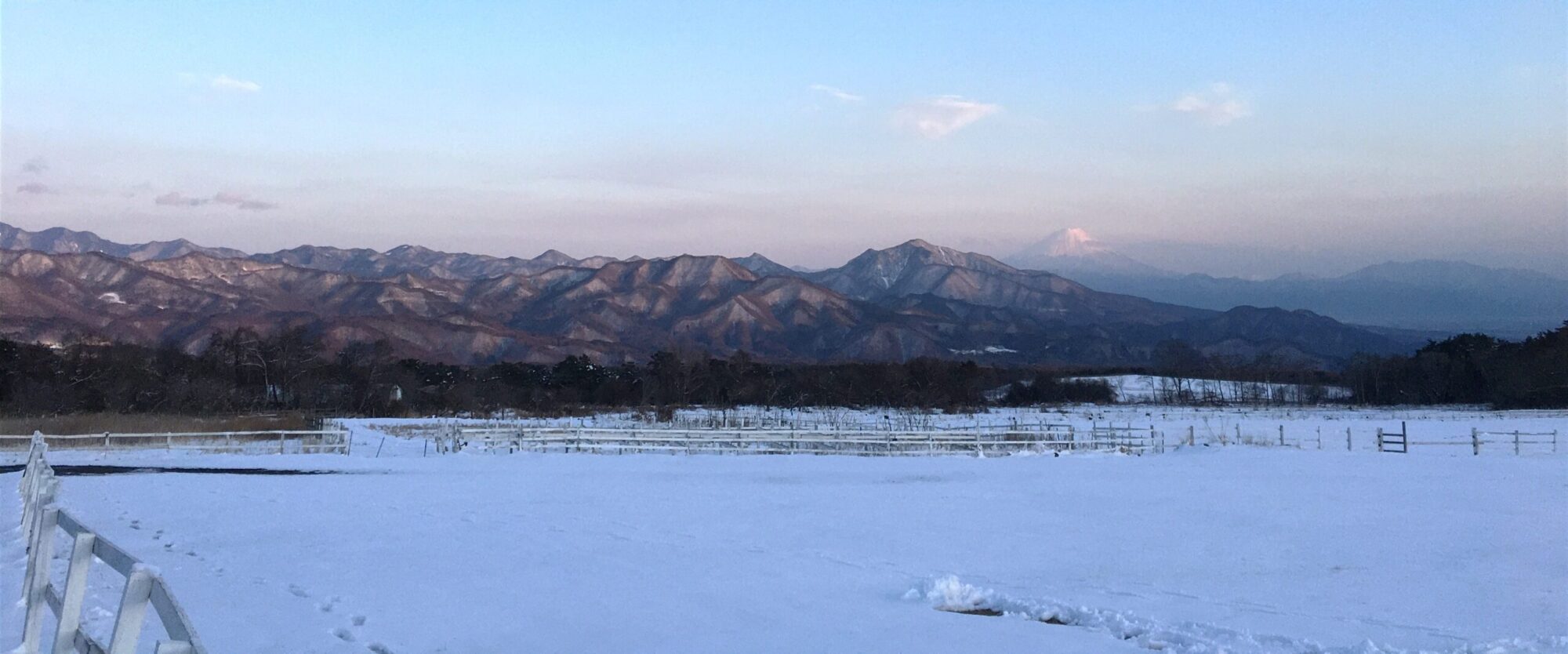
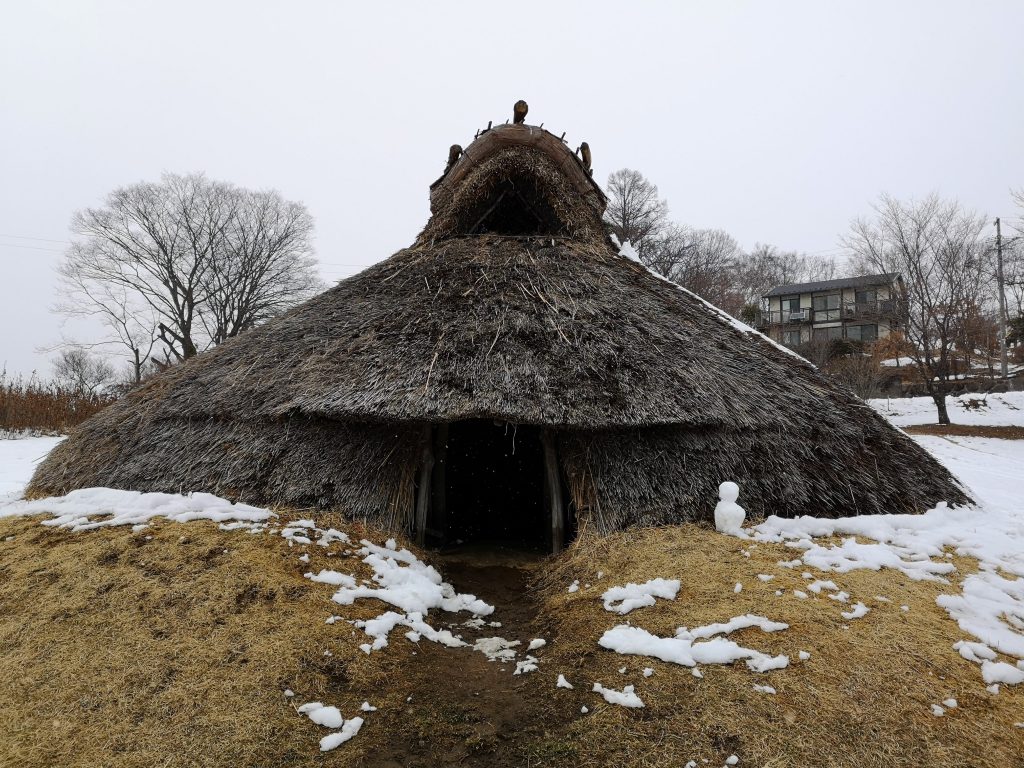
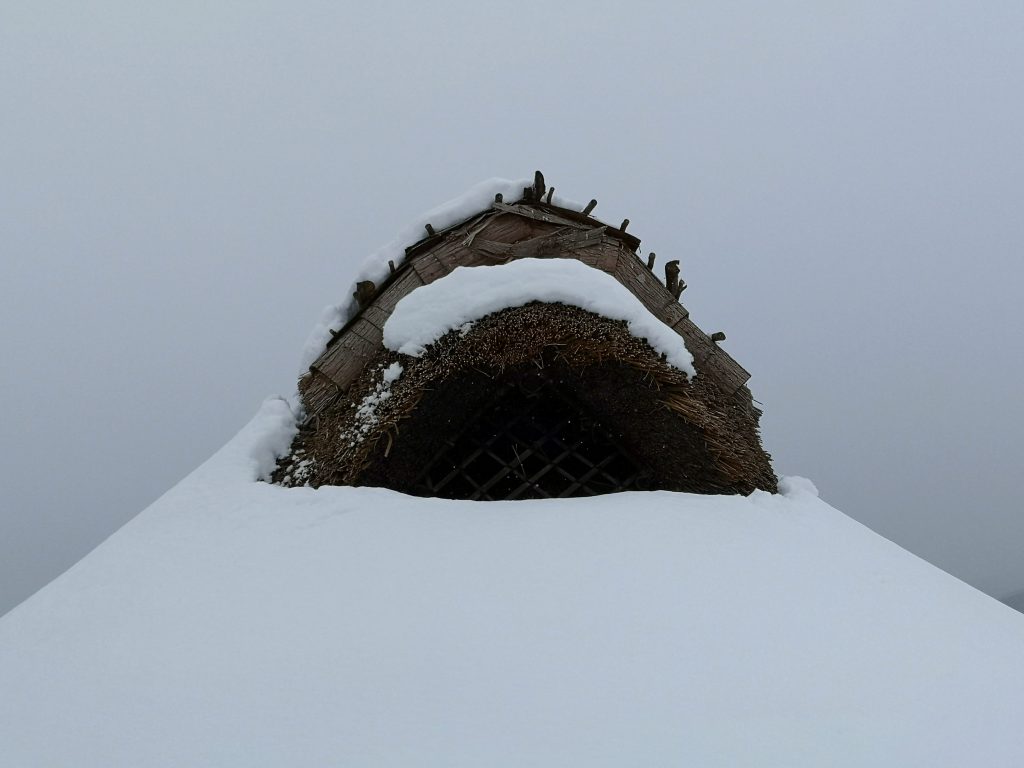
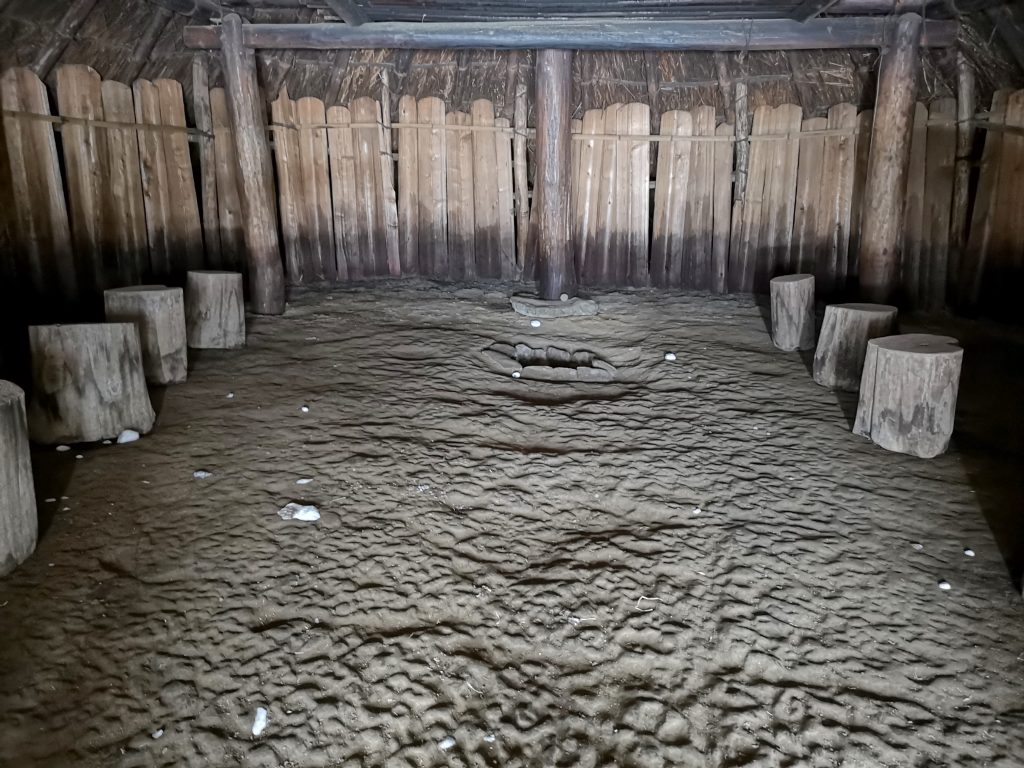
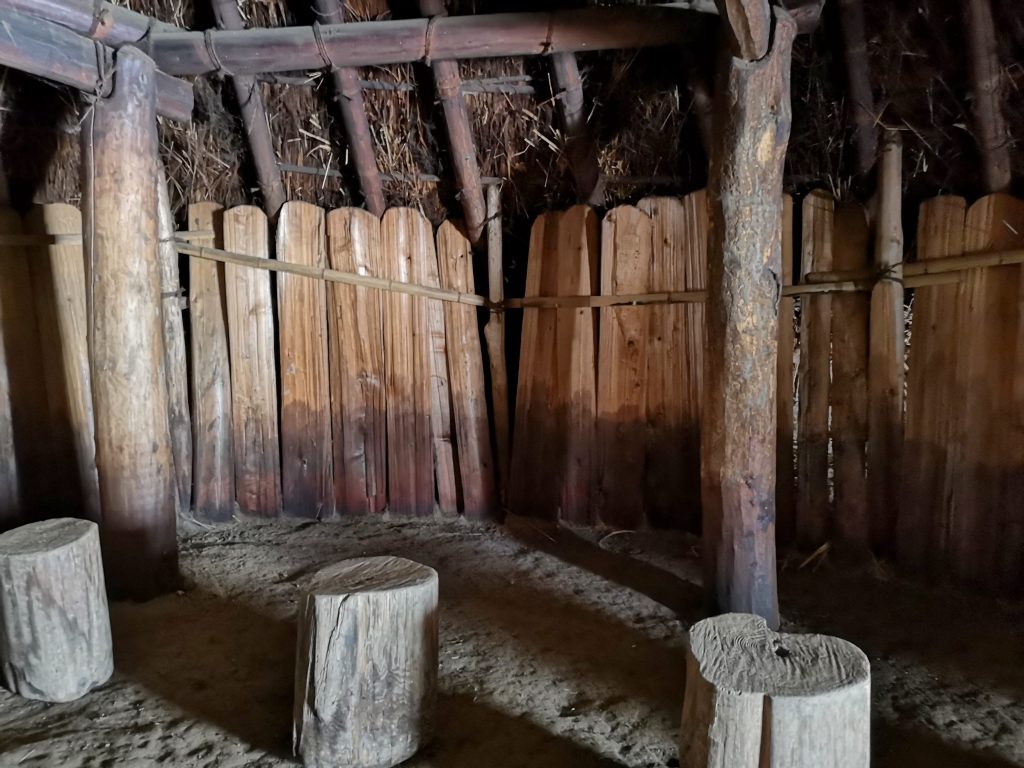
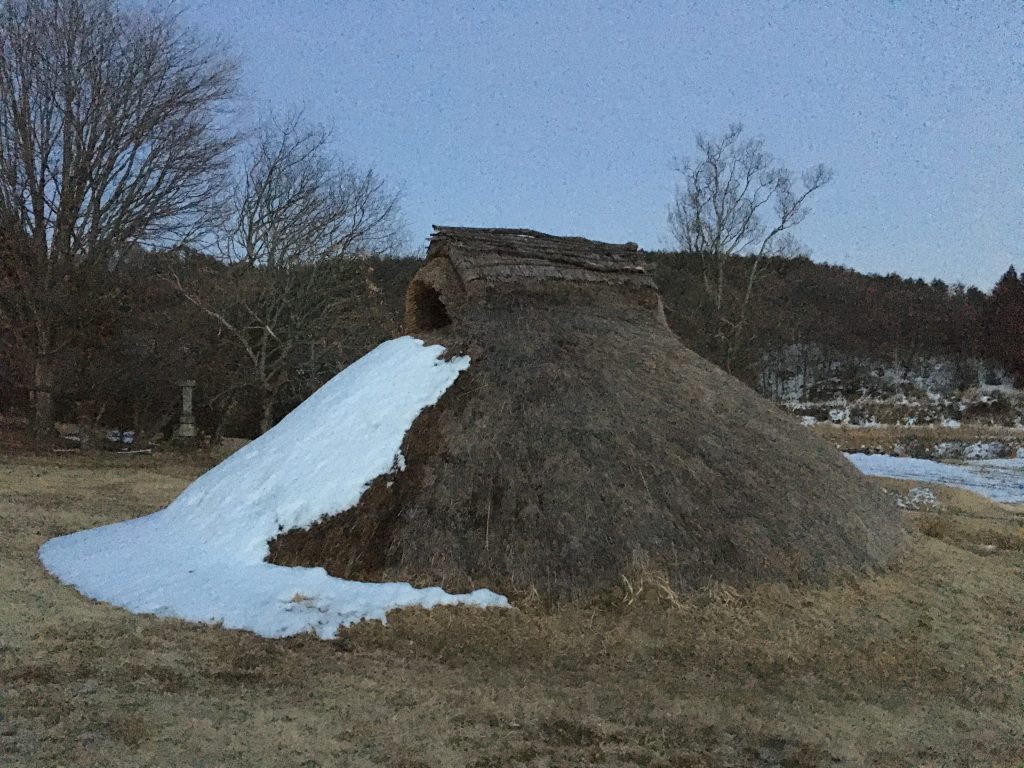
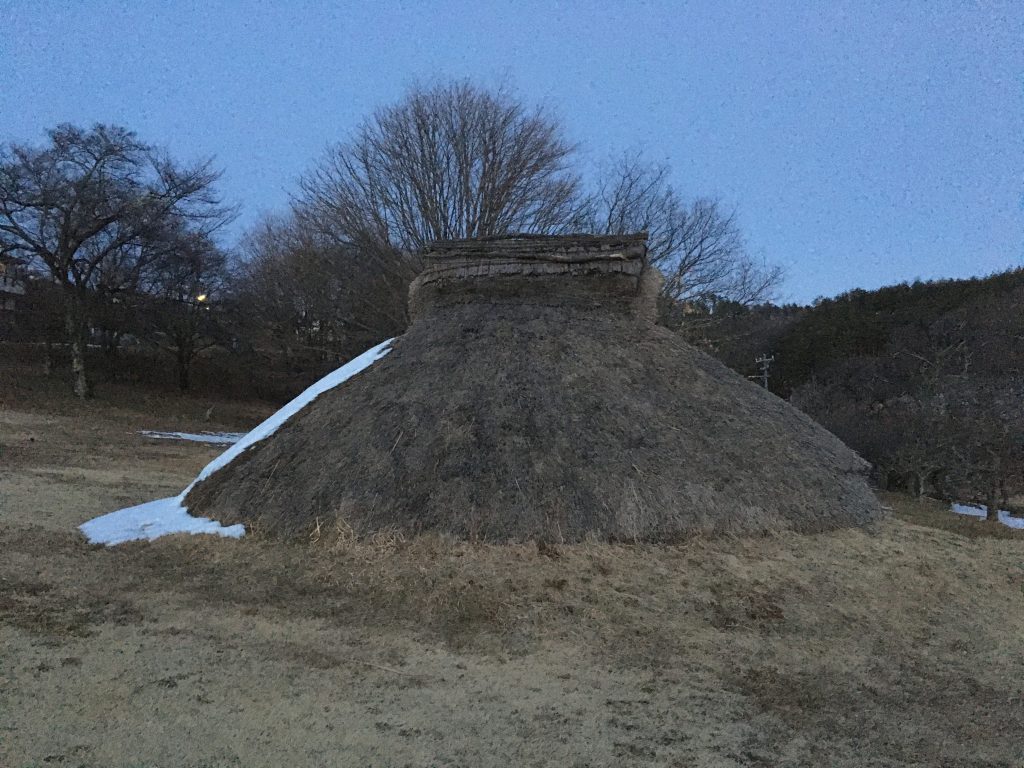
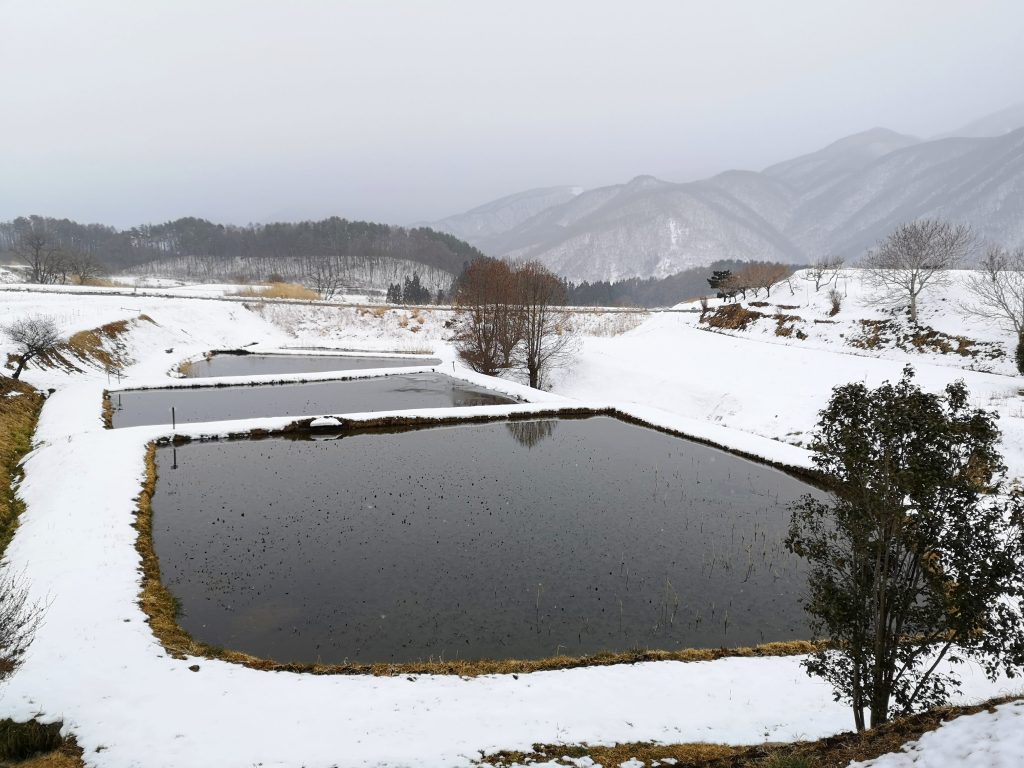
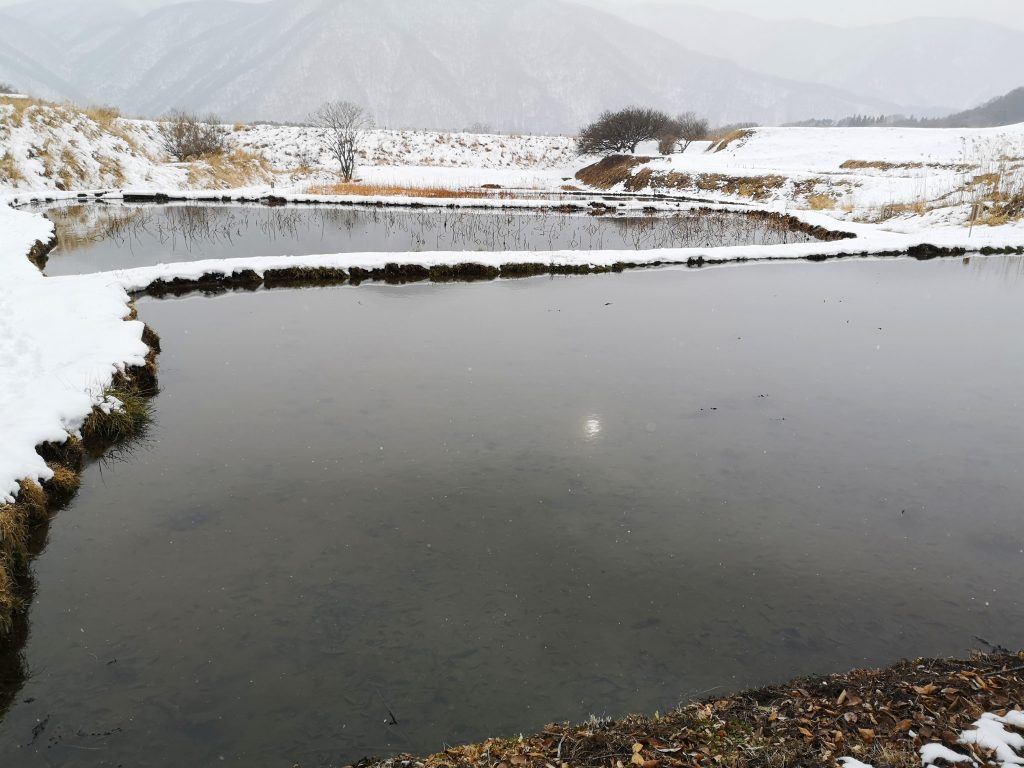
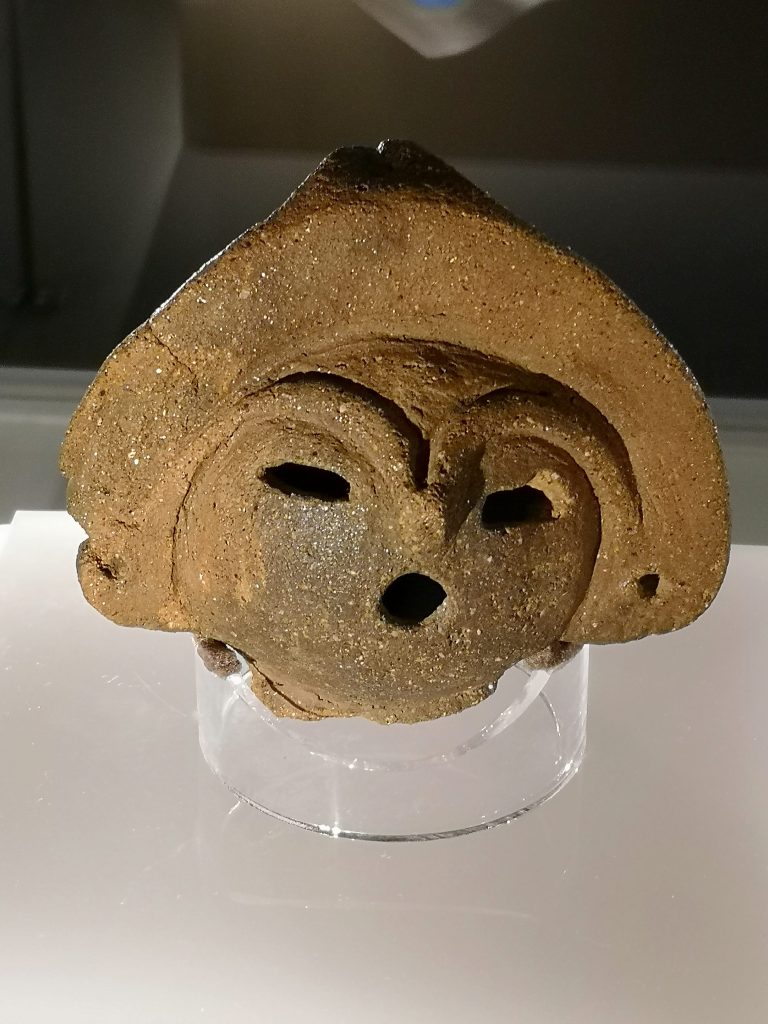
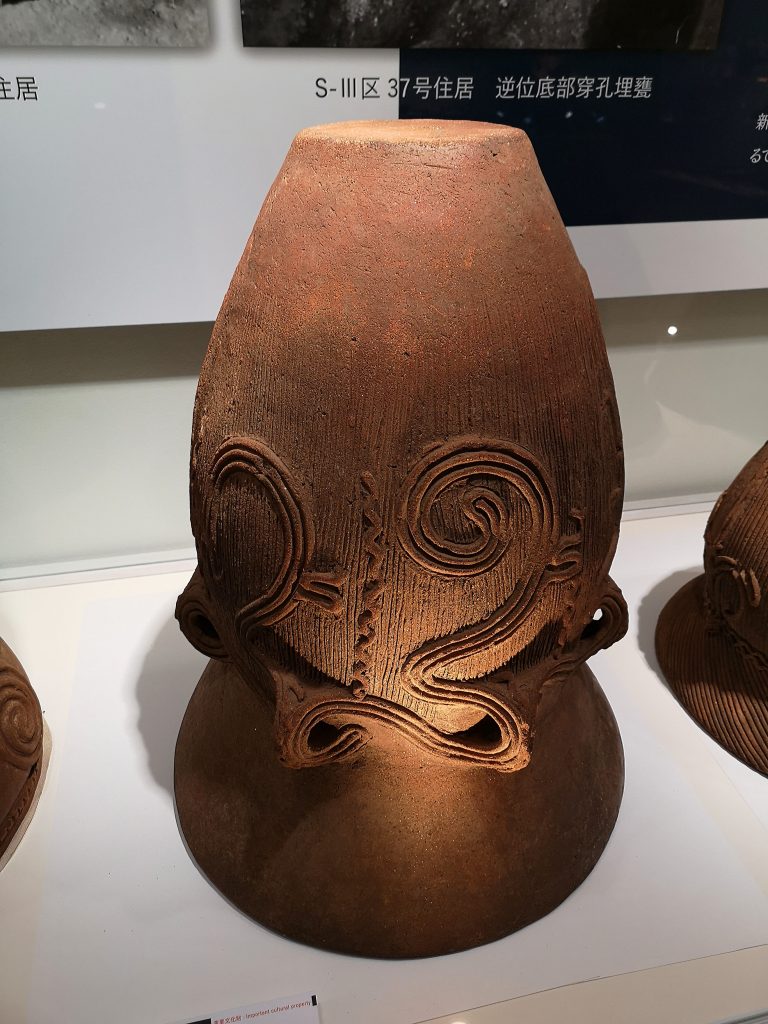
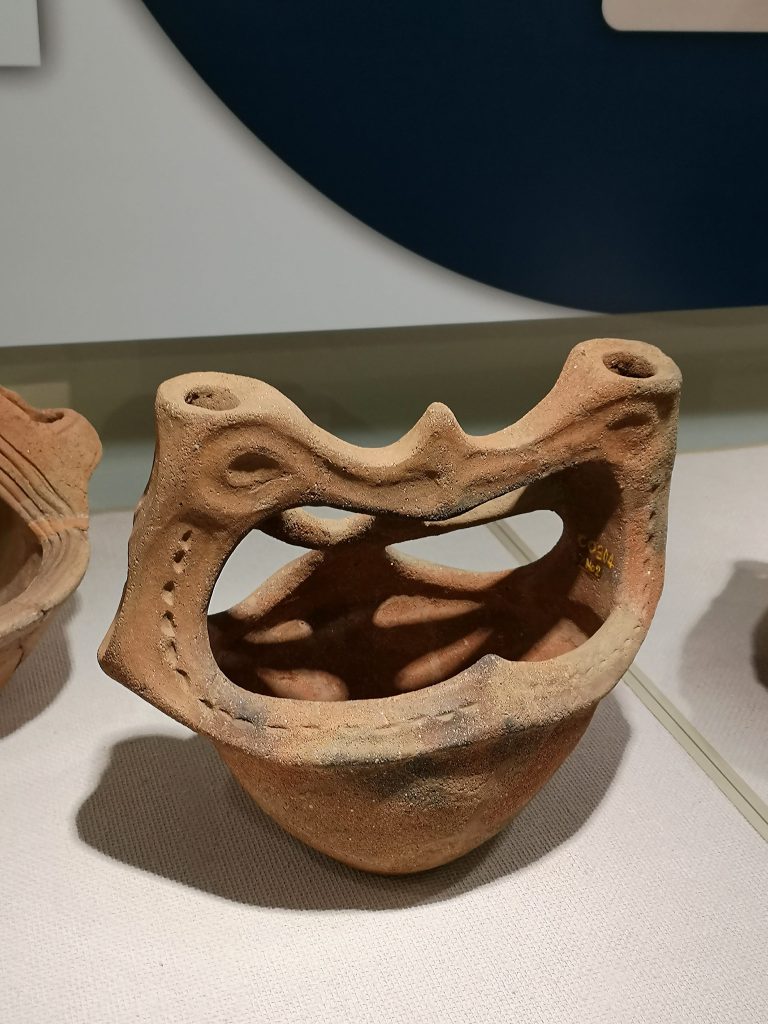
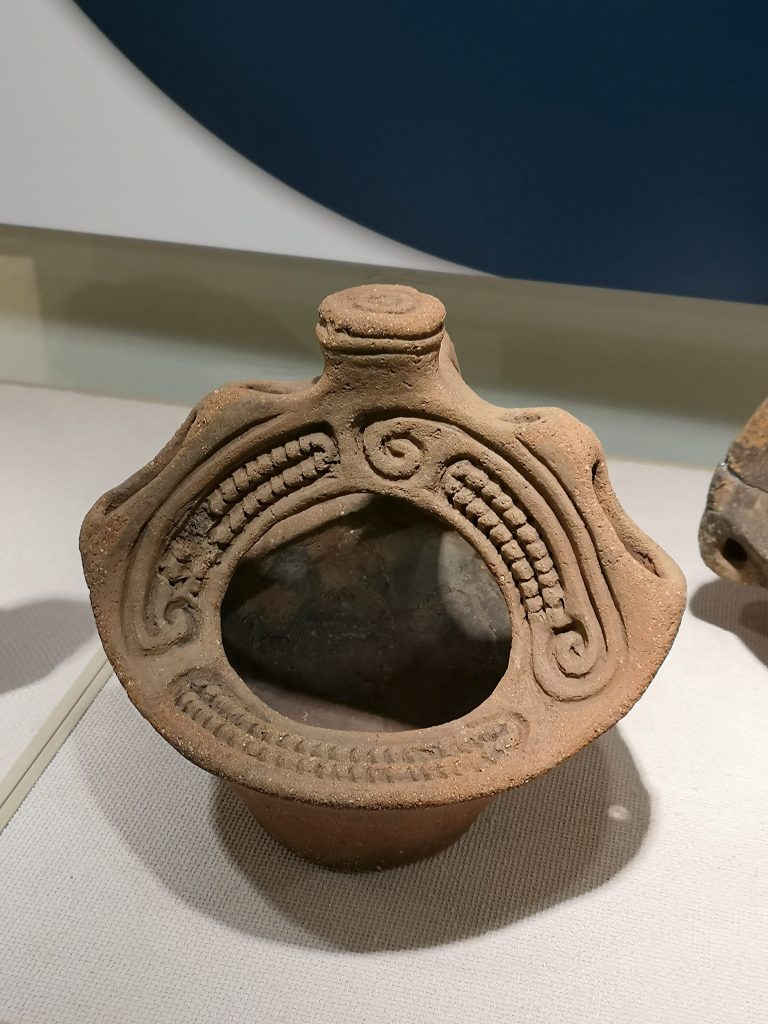
The Idojiri Ruins is a mid-Jomon period archeological site (approximately 2500–1500 BCE) located in the town of Fujimi in Nagano Prefecture. There are a restored pit-dwelling house, crop fields, and paddy-like ponds. Idojiri Archeological Museum is in the site near the gate. The artifacts excavated from the ruins are exhibited in the museum. https://en.wikipedia.org/wiki/Idojiri_ruins
FYI: Jomon Prehistoric Sites in Northern Japan is a serial UNESCO World Heritage Site consisting 17 Jomon-period archeological sites in the southern Hokkaido and northern Honshu islands. It was officially inscribed on the World Heritage List in July 2021. (https://whc.unesco.org/en/list/1632/) (https://jomon-japan.jp/en/)
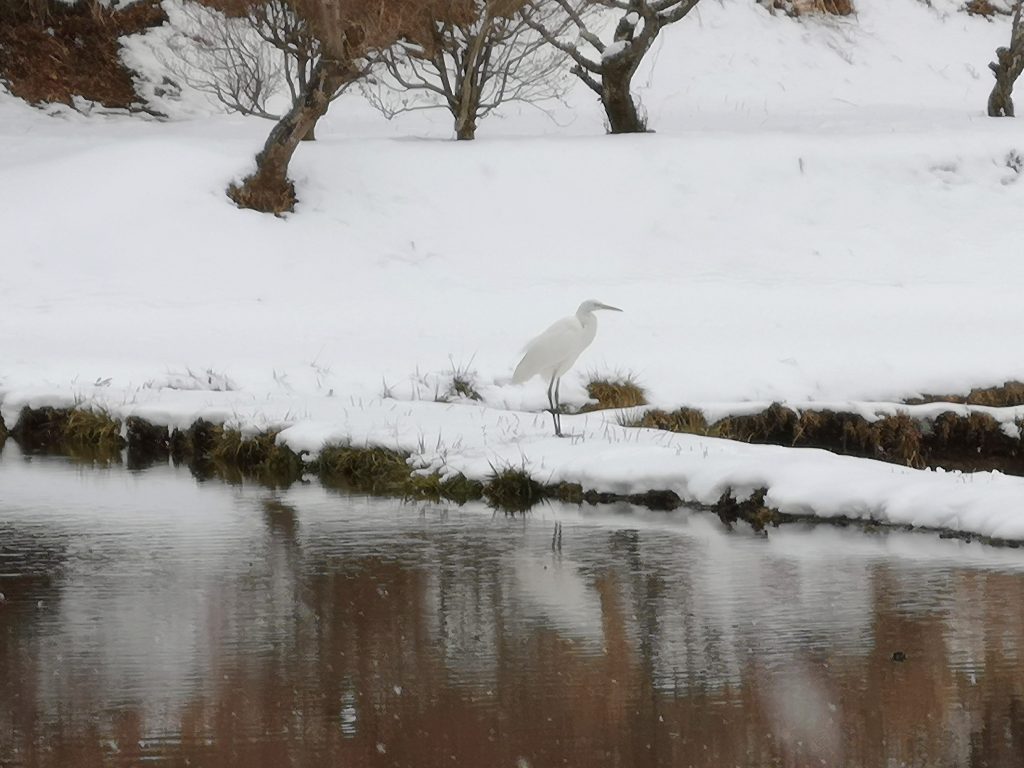
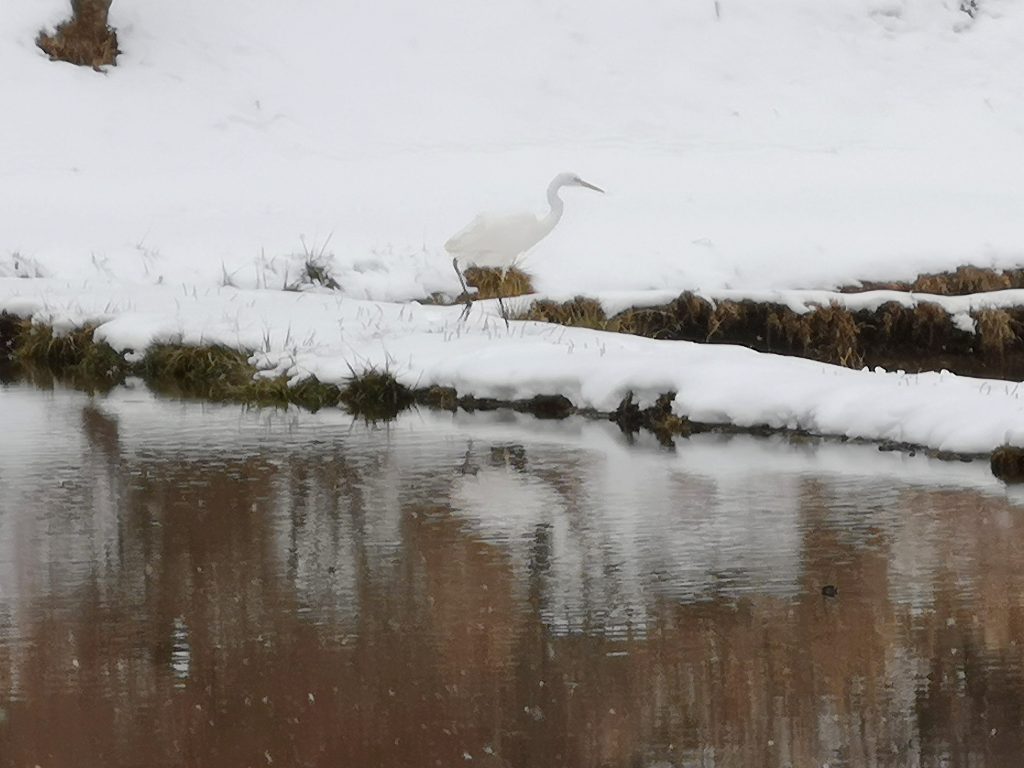
Front Entrance of the Restored Pit Dwelling and Back Top of the Roof Part, Idojiri Ruins, Fujimi-town, Nagano, 02/13/2022Inside of the Restored Pit Dwelling (There is an open hearth in the back); Side Wall Part, Idojiri Ruins, Fujimi-town, Nagano, 02/13/2022Side Views of the Restored Pit Dwelling, Idojiri Ruins, Fujimi-town, Nagano, 02/26/2022Paddy-Like Ponds: In spring, water plants like Acorus calamus, Iris ensata, ancient strain(s) of rice, Water lily (Nymphaea caerulea), lotus (Nelumbo nucifera), and Nuphar japonica will be planted, Idojiri Ruins, Fujimi-town, Nagano, 02/13/2022Egret, Idojiri Ruins, Fujimi-town, Nagano, 02/13/2022
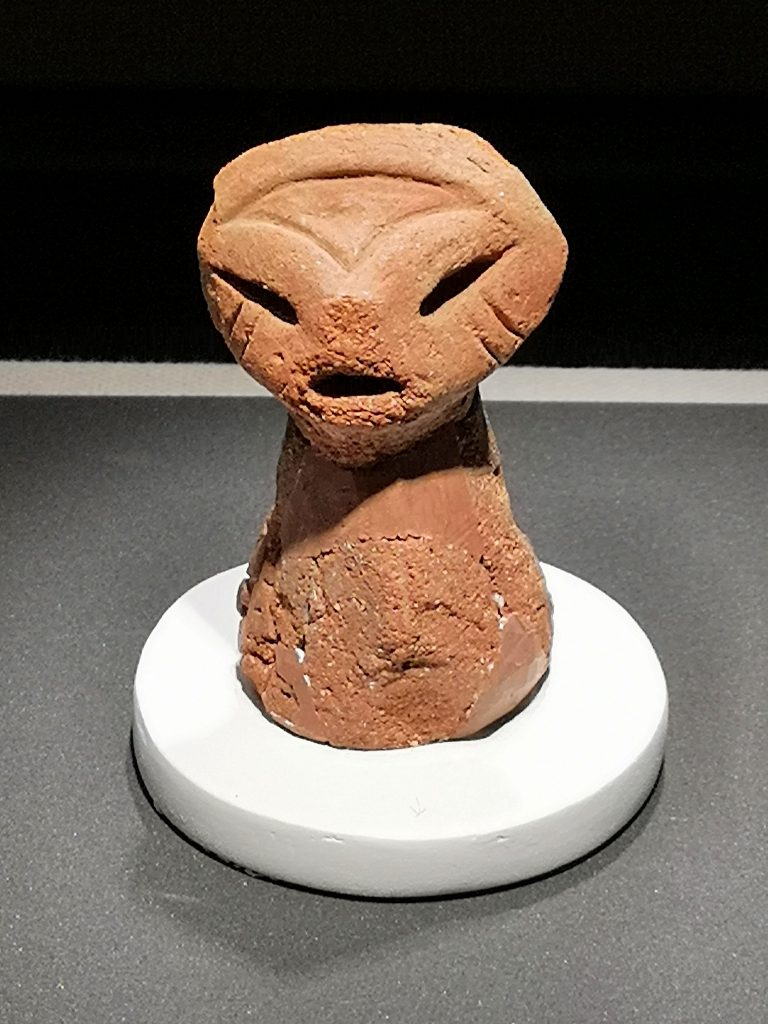
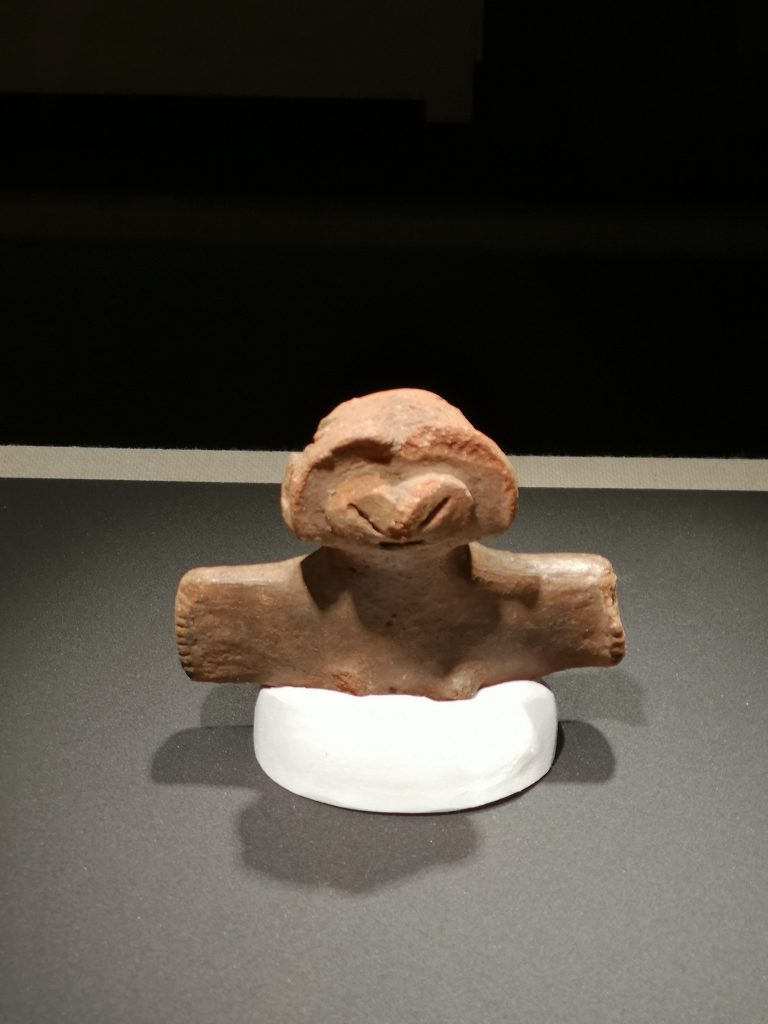
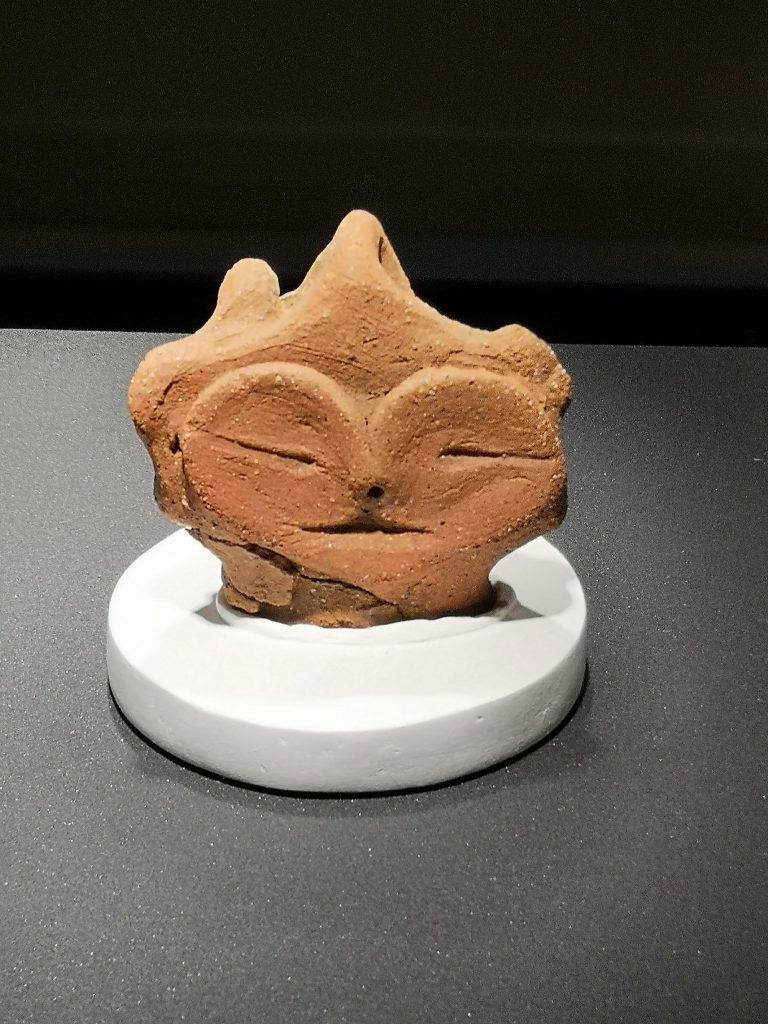
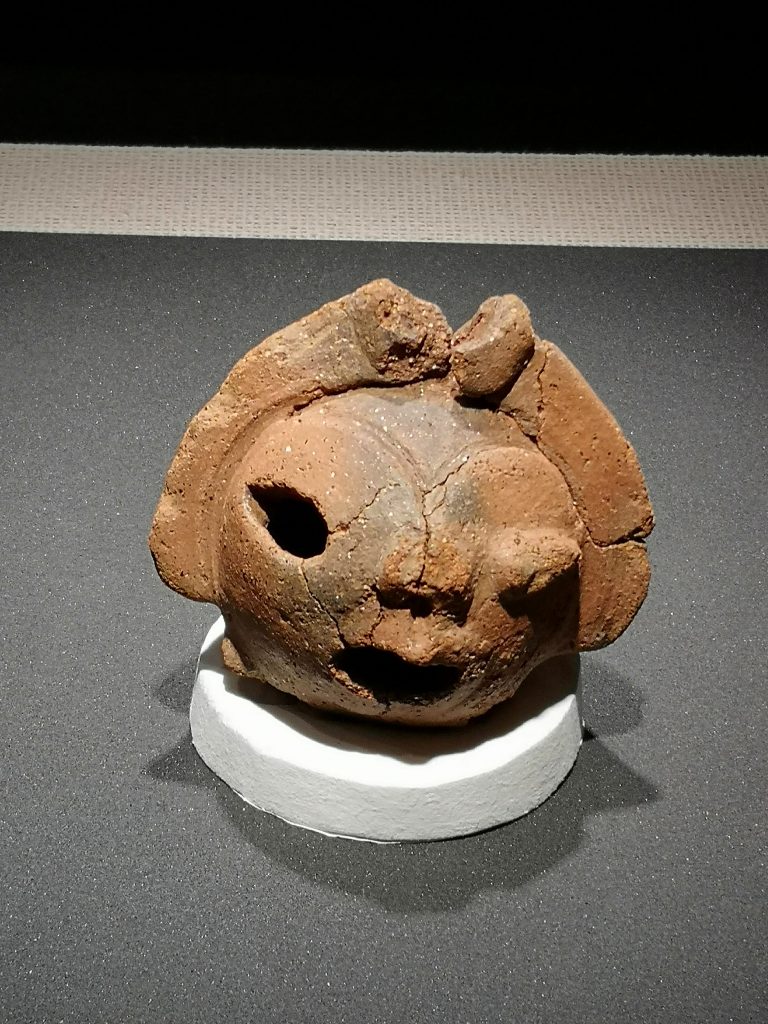
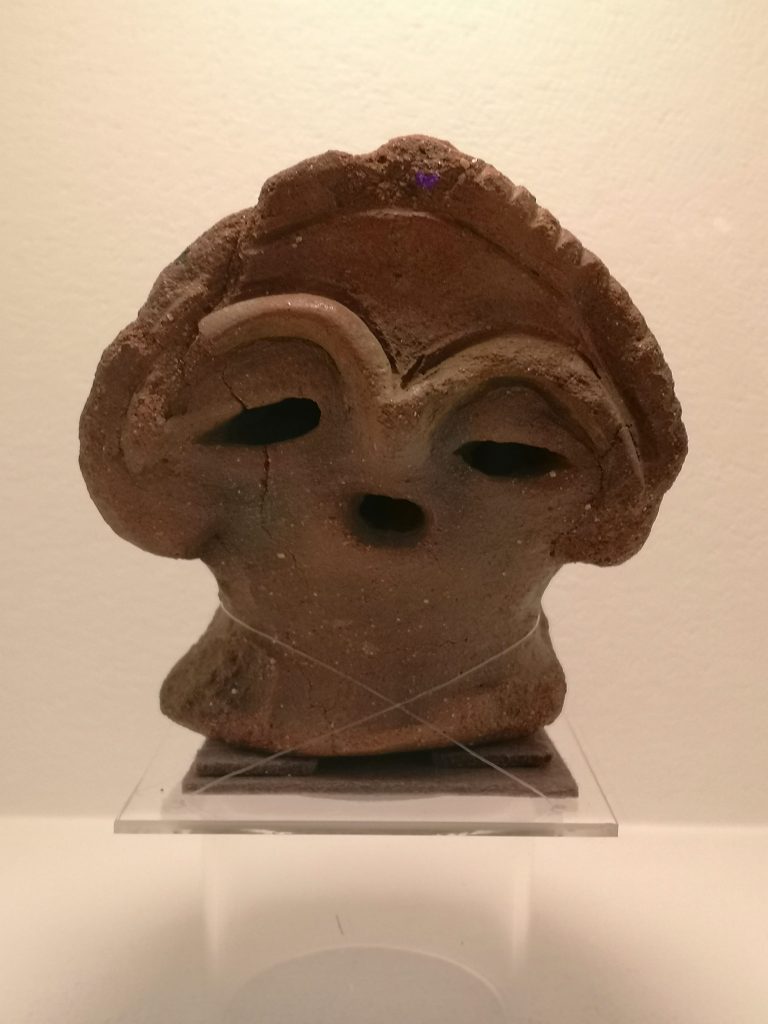
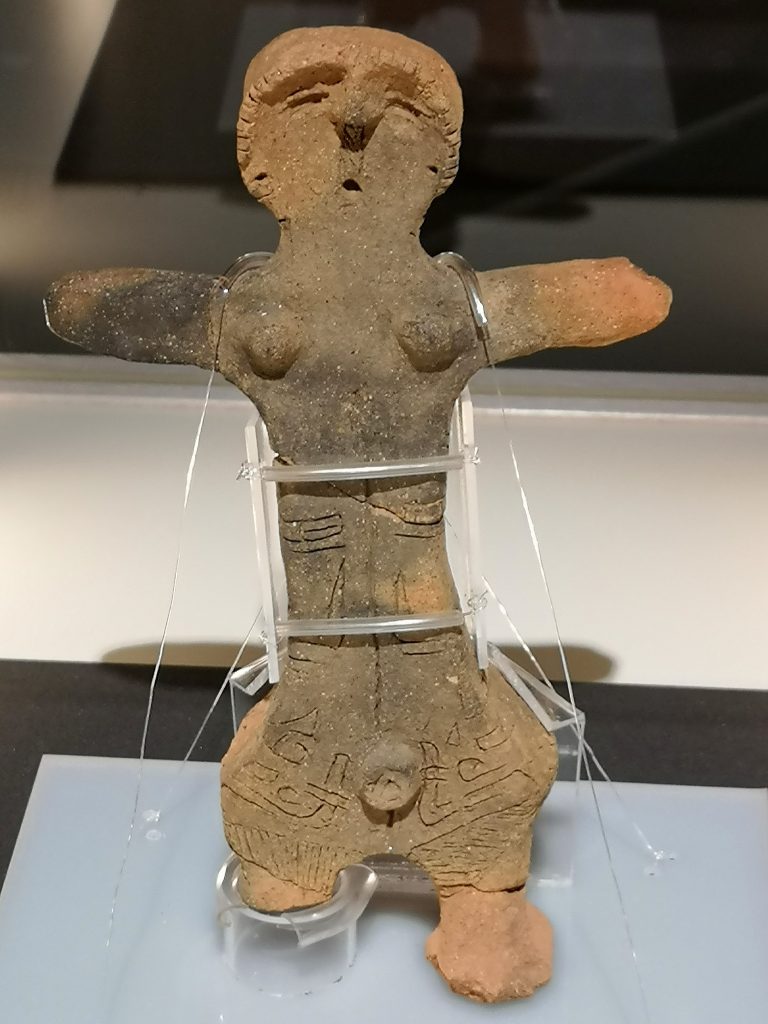
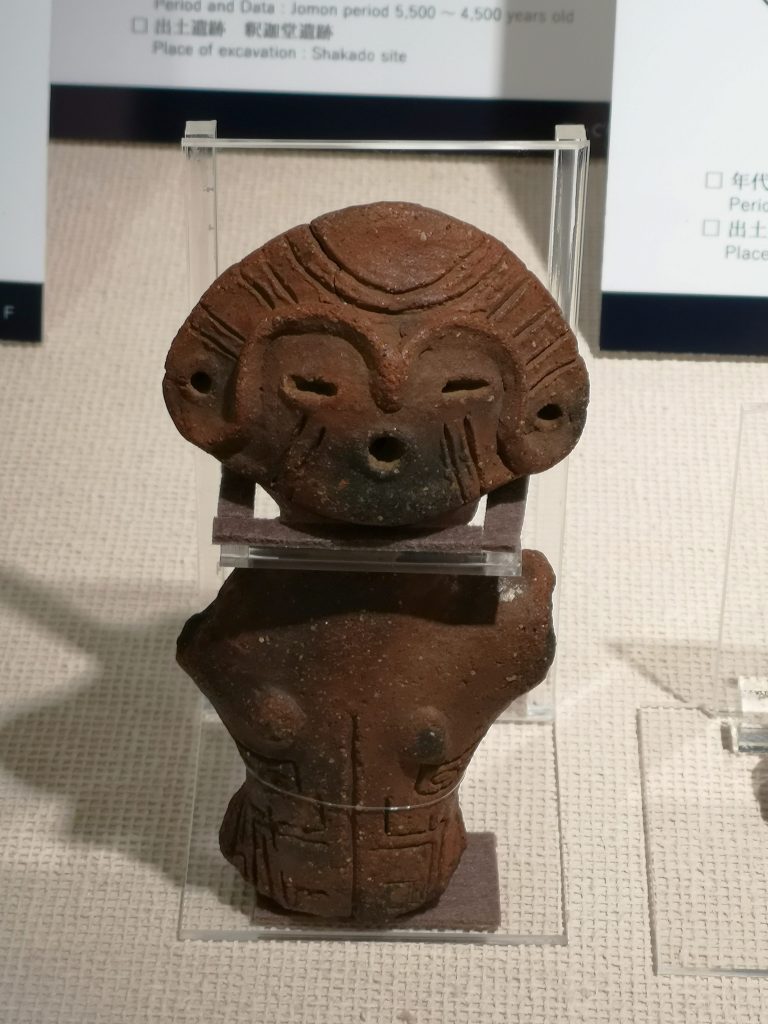
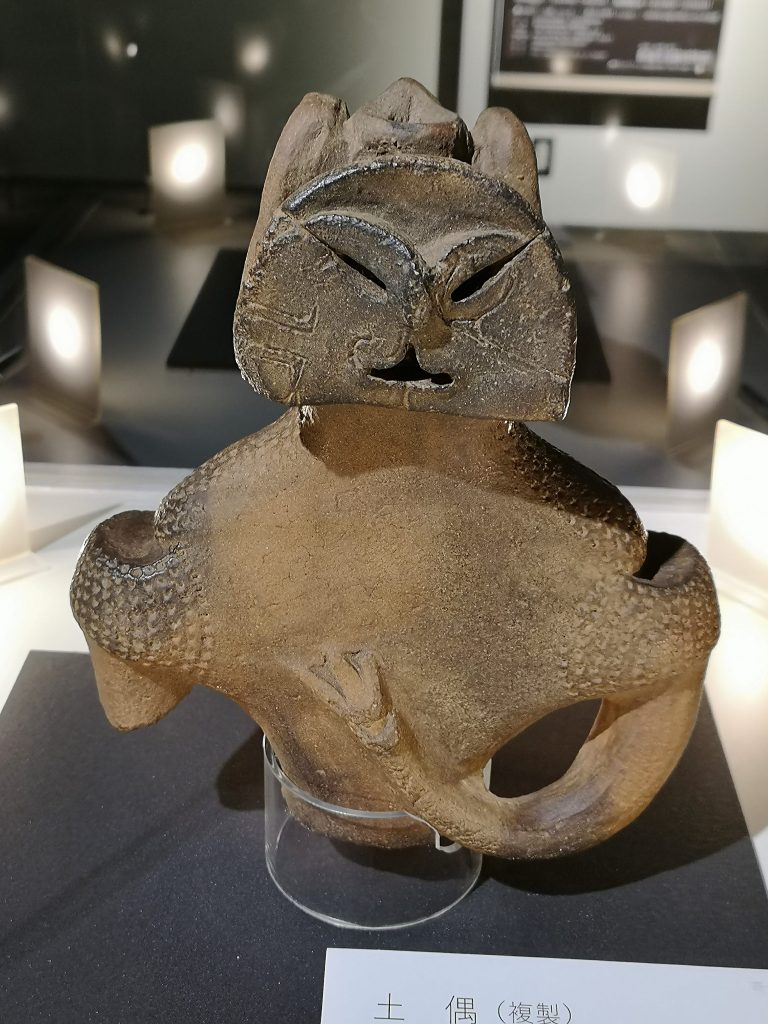
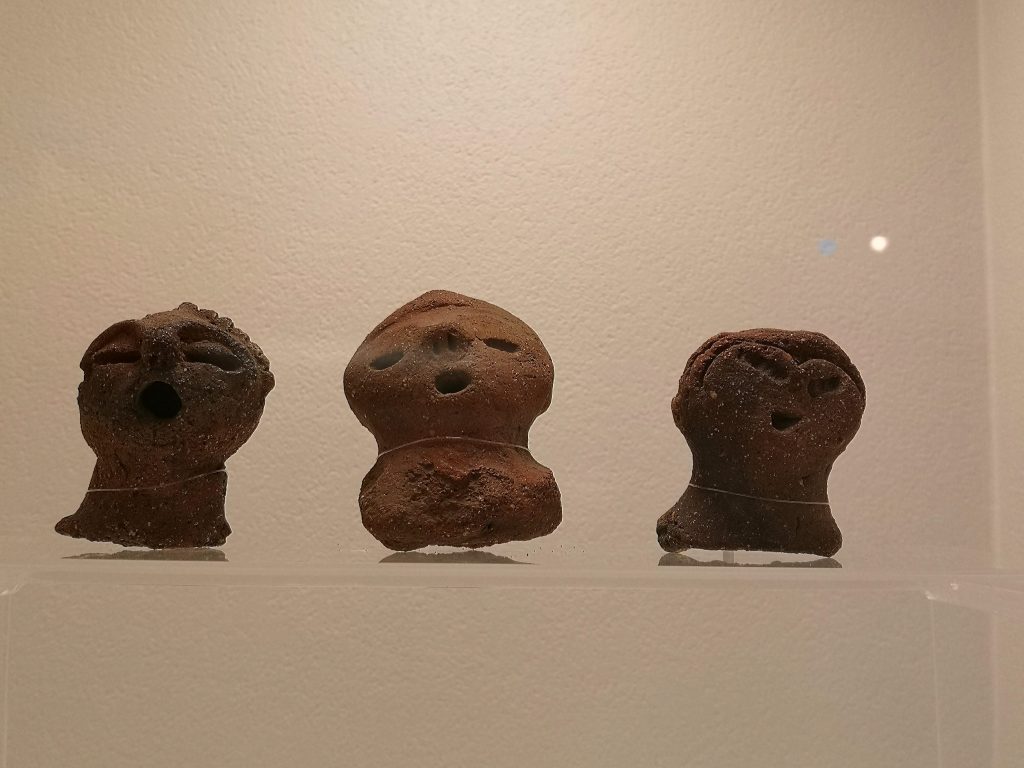
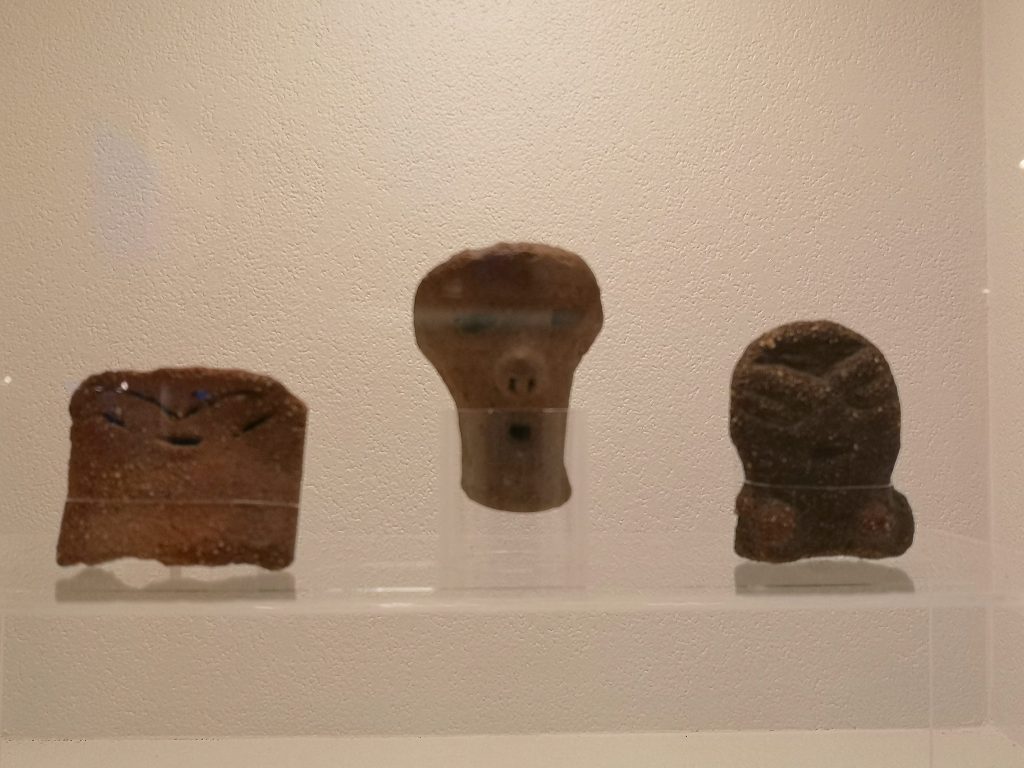
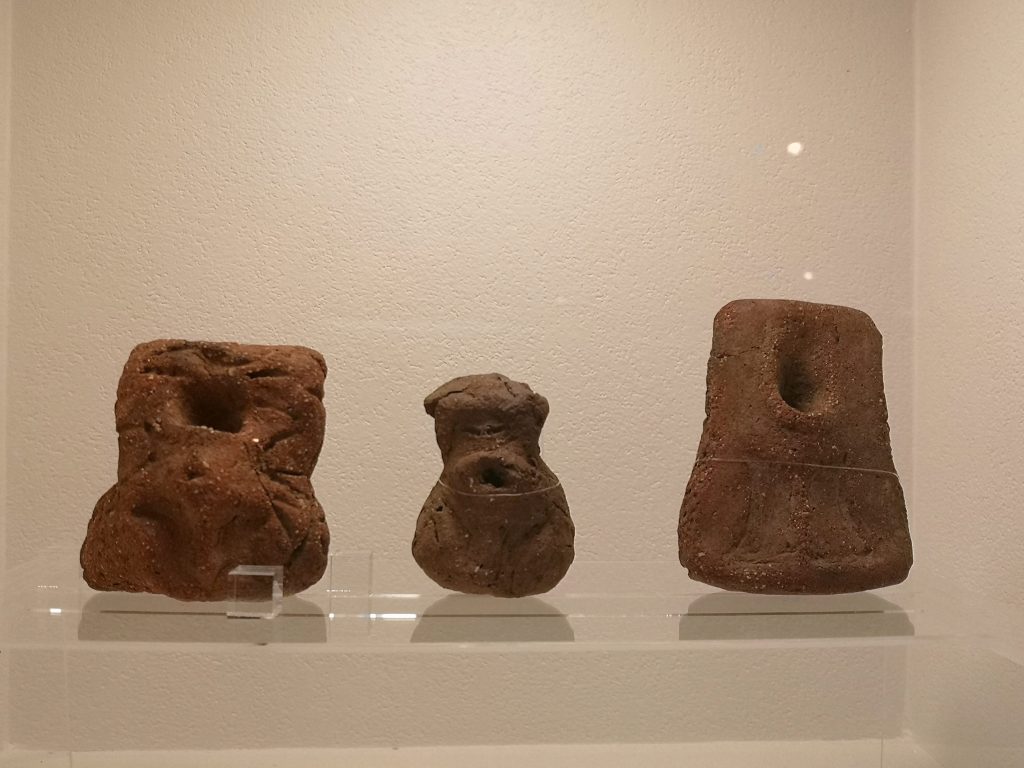
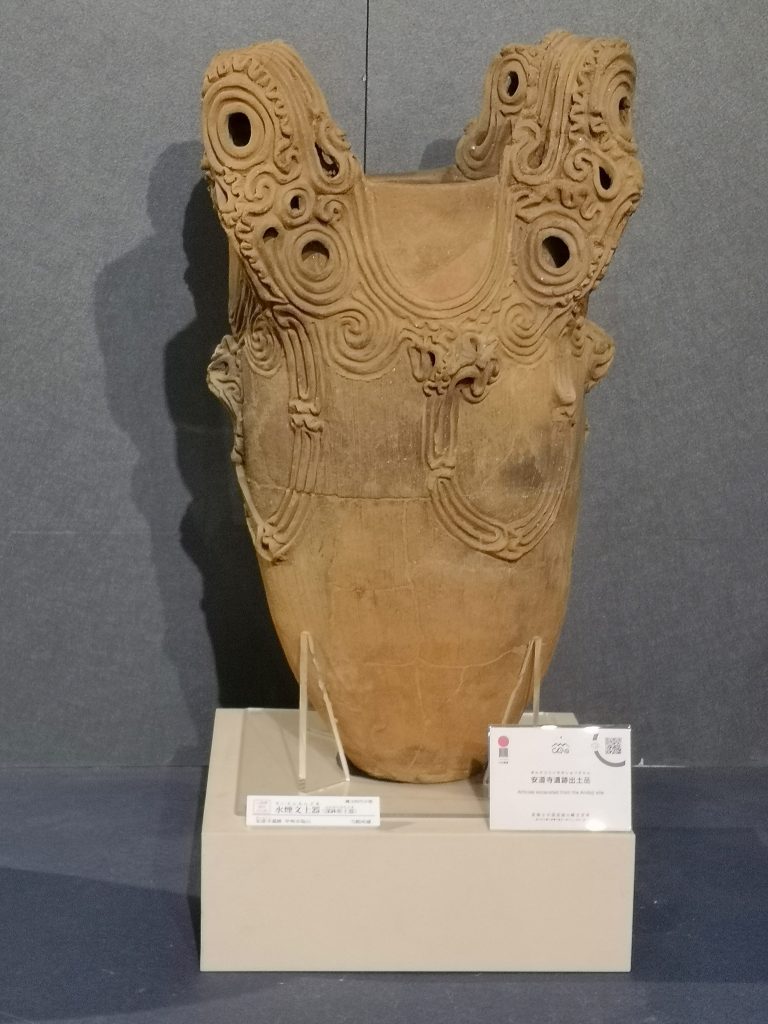
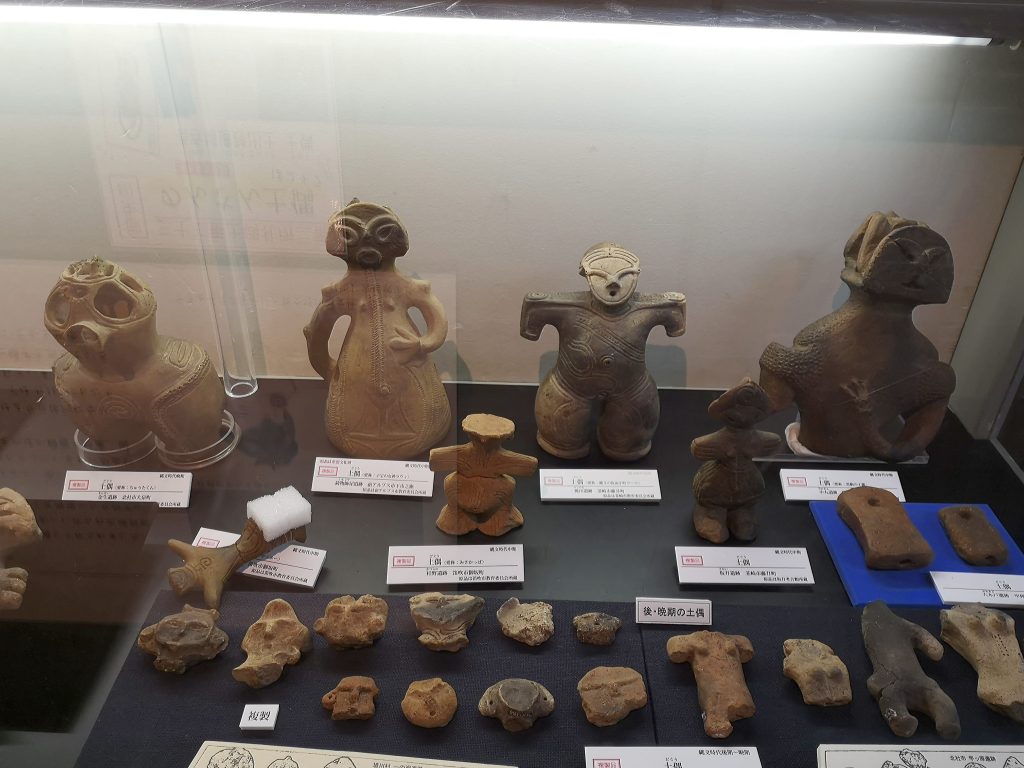
The Shakado Museum of Jomon (rope marking) Culture is located in the city of Fuefuki in Yamanashi Prefecture. It has been collecting clay figures from the Jomon period (5,500~4,500 years ago). They were found in the remains of the pit-houses and dug-out hollows. Almost all the figures were excavated broken and they were seemed to have been broken on purpose and thought to have been used in some ritual ceremony. Most of the figures were pregnant women, so they may have been used for protection against the risks of childbirth, illness and death, or in fertility rites to make their chances of having babies or of giving birth more successfully. https://www.eps4.comlink.ne.jp/~shakado/
Clay Figures, Shakado Museum of Jomon Culture, Fuefuki-city, Yamanashi, 1/23/2022
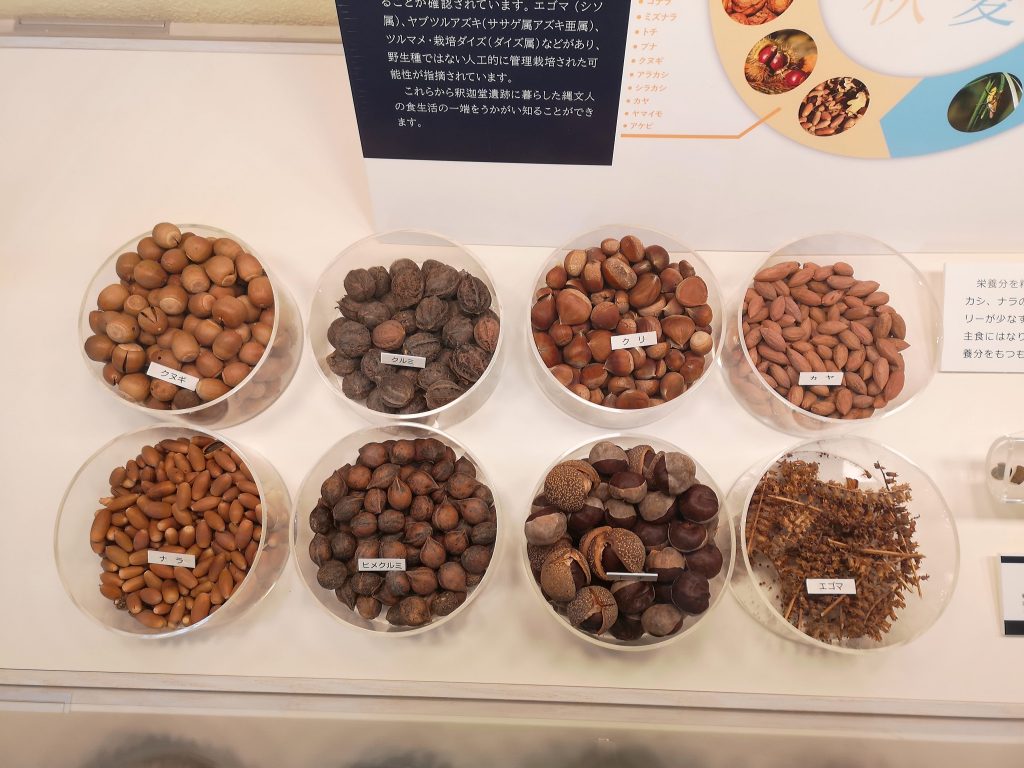
The samples of the nuts consumed by the Jomon people.
Quercus acutissima, Walnut, Chestnut and Japanese torreya;
Oak, Japanese small walnut, Japanese horse-chestnut and Perilla frutescens.
Shakado Museum of Jomon Culture, Fuefuki-city, Yamanashi, 1/23/2022
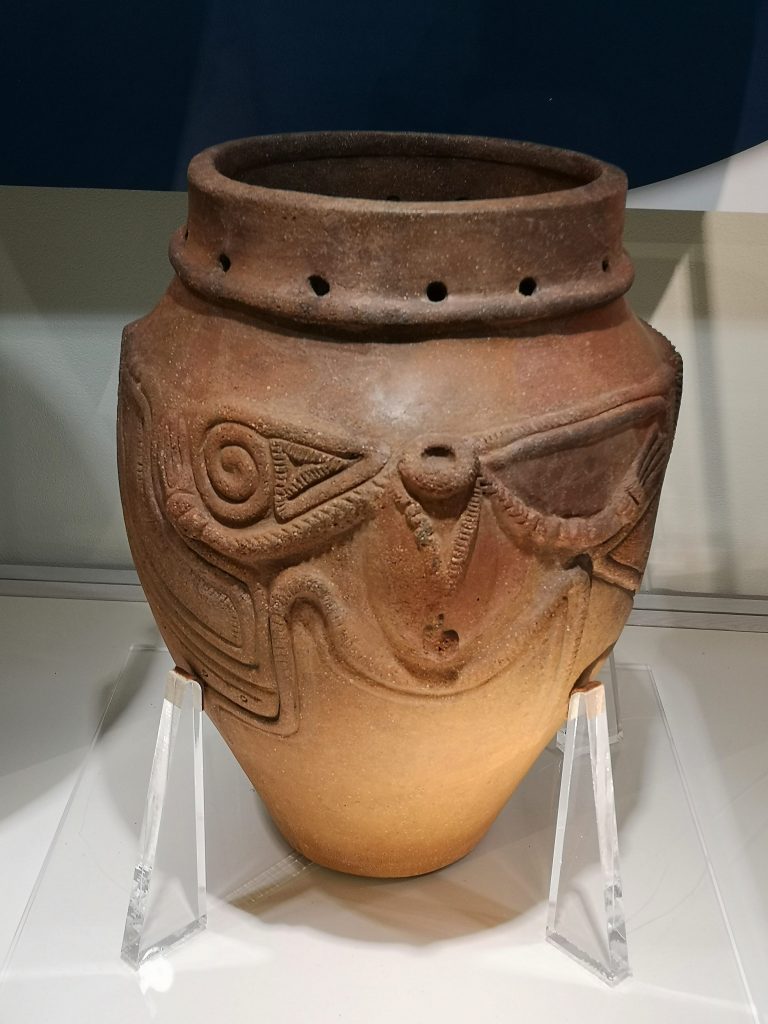
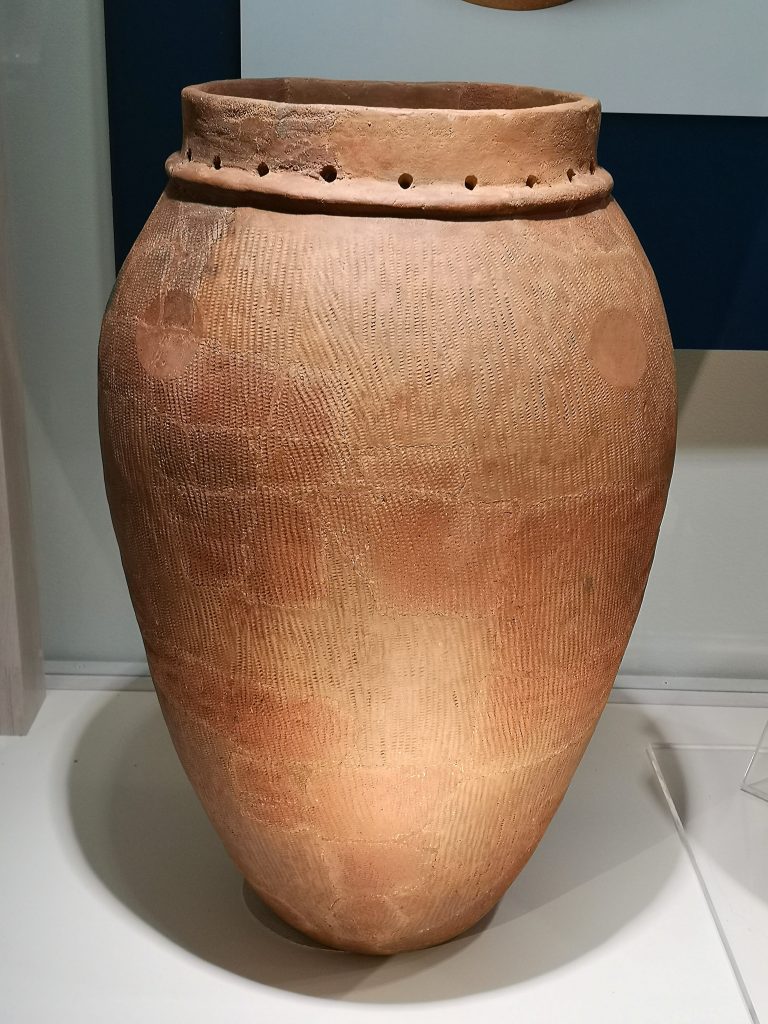
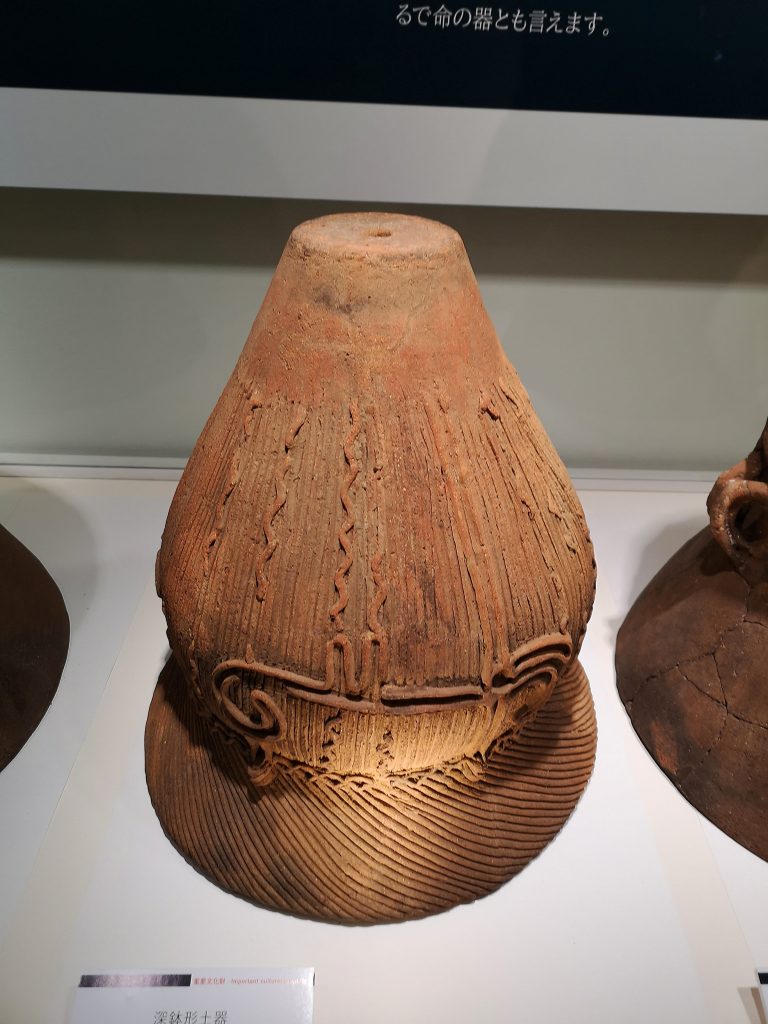
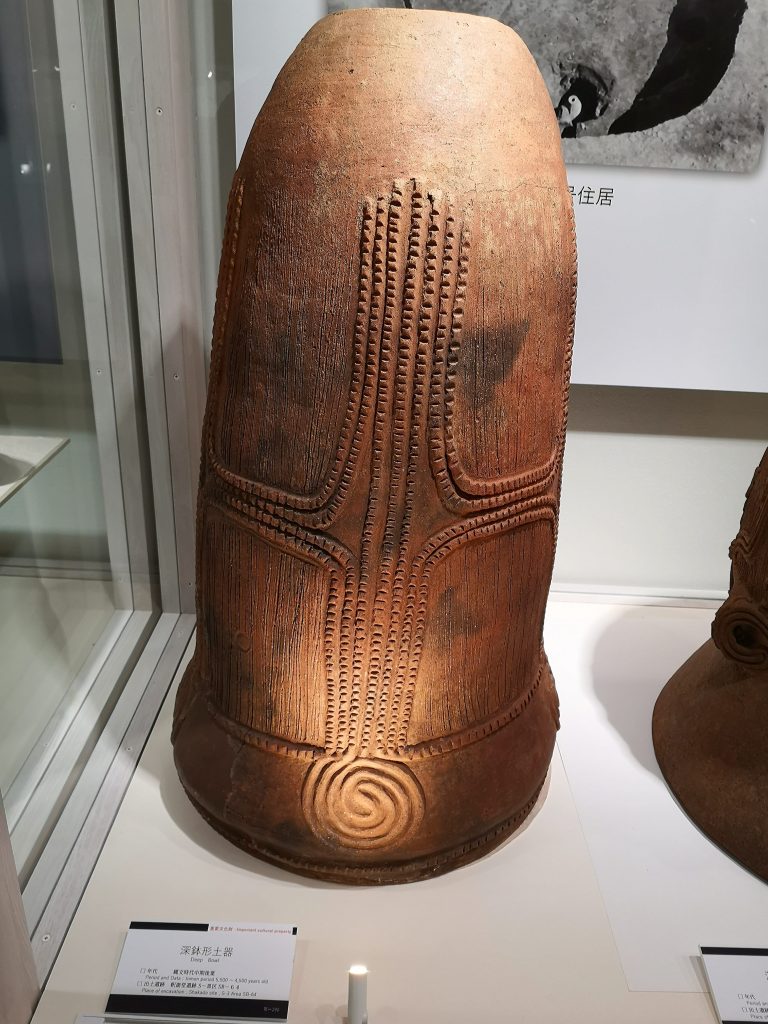
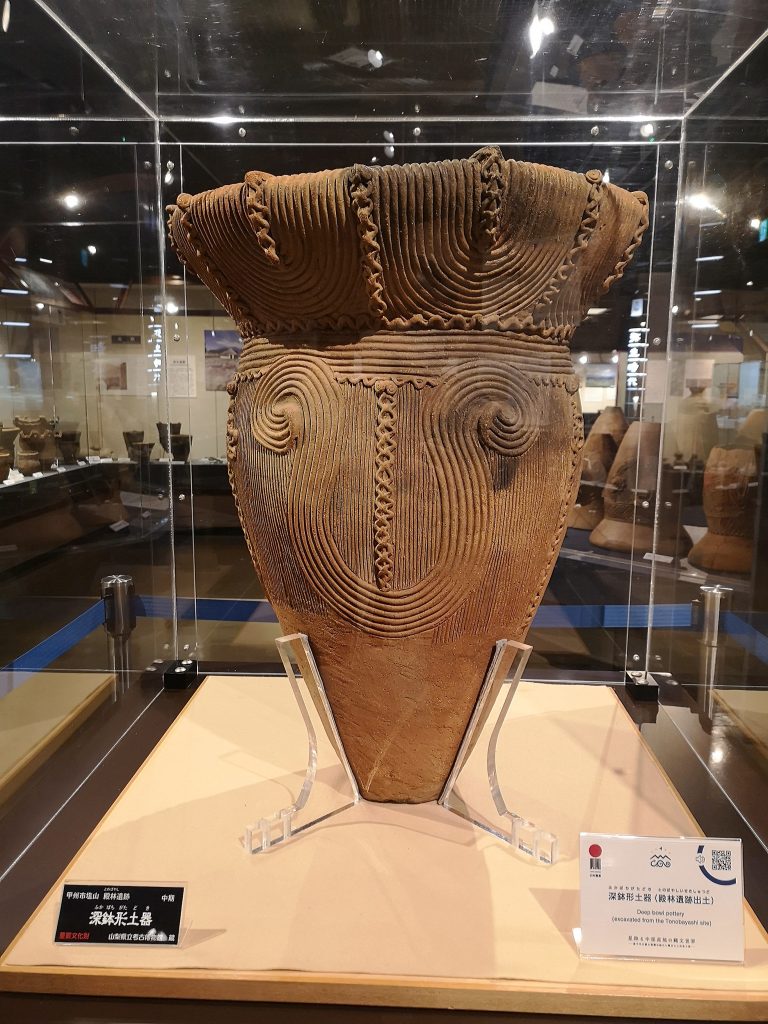
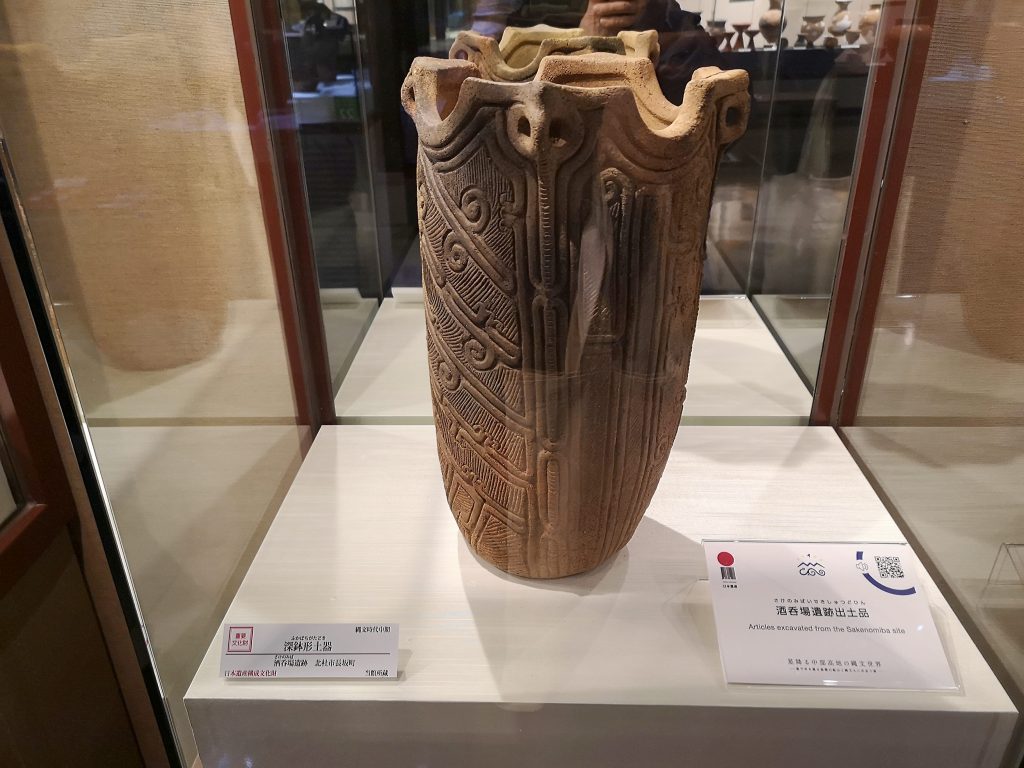
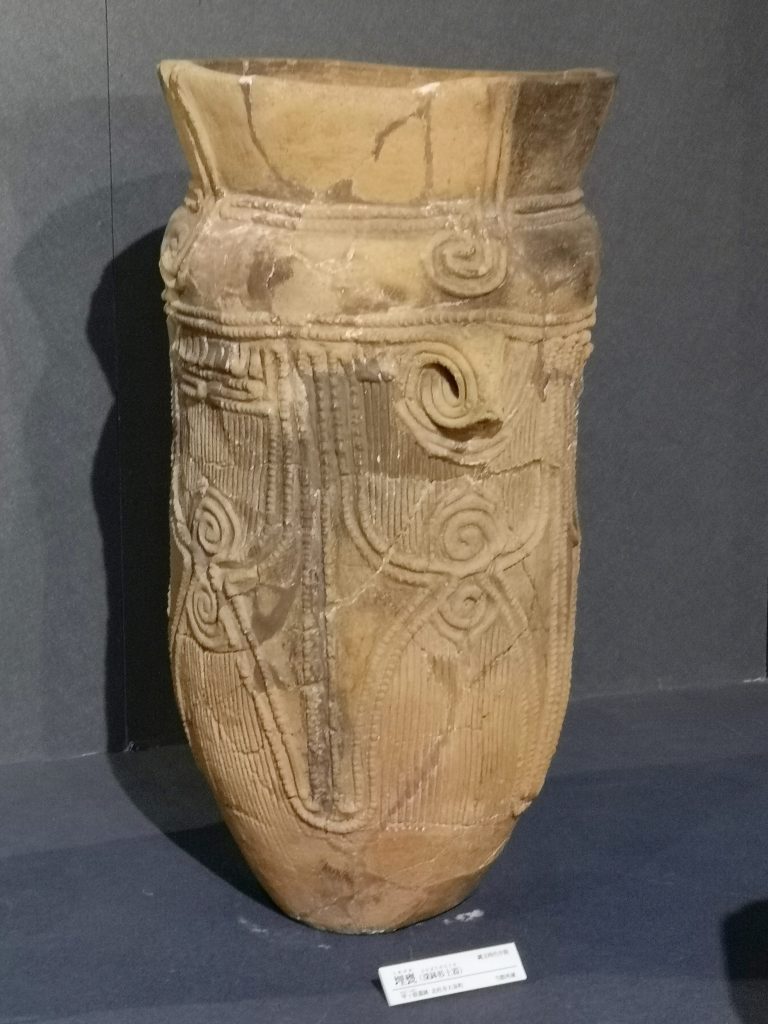
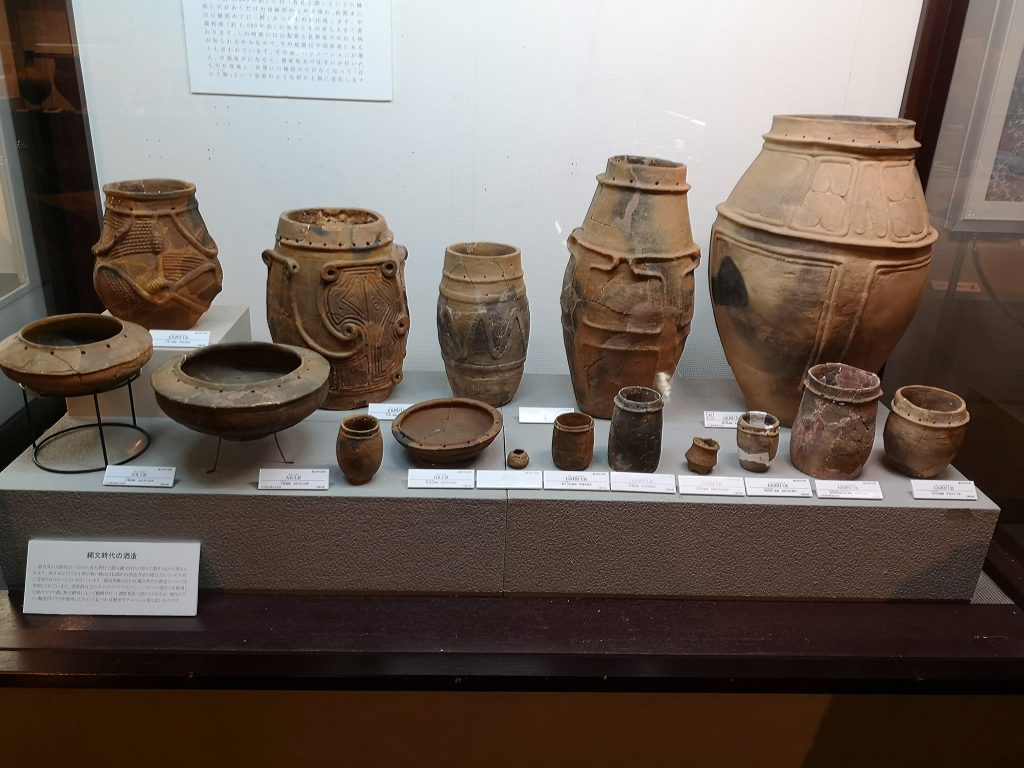
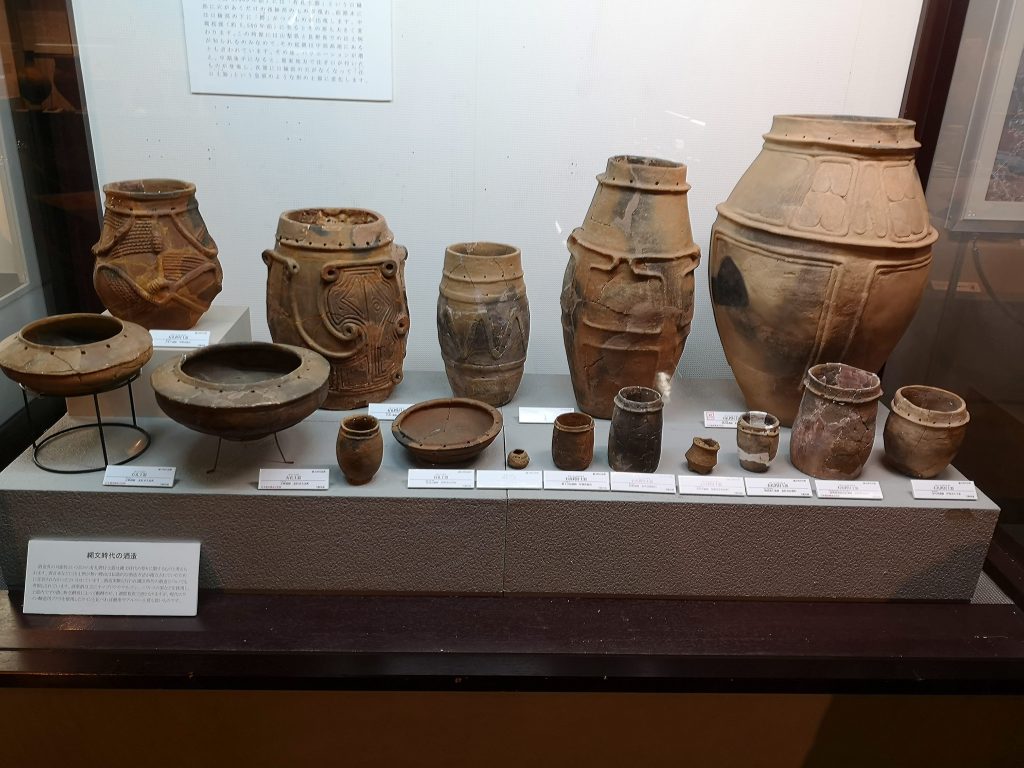
Deep bowl earthenware with rope markings.
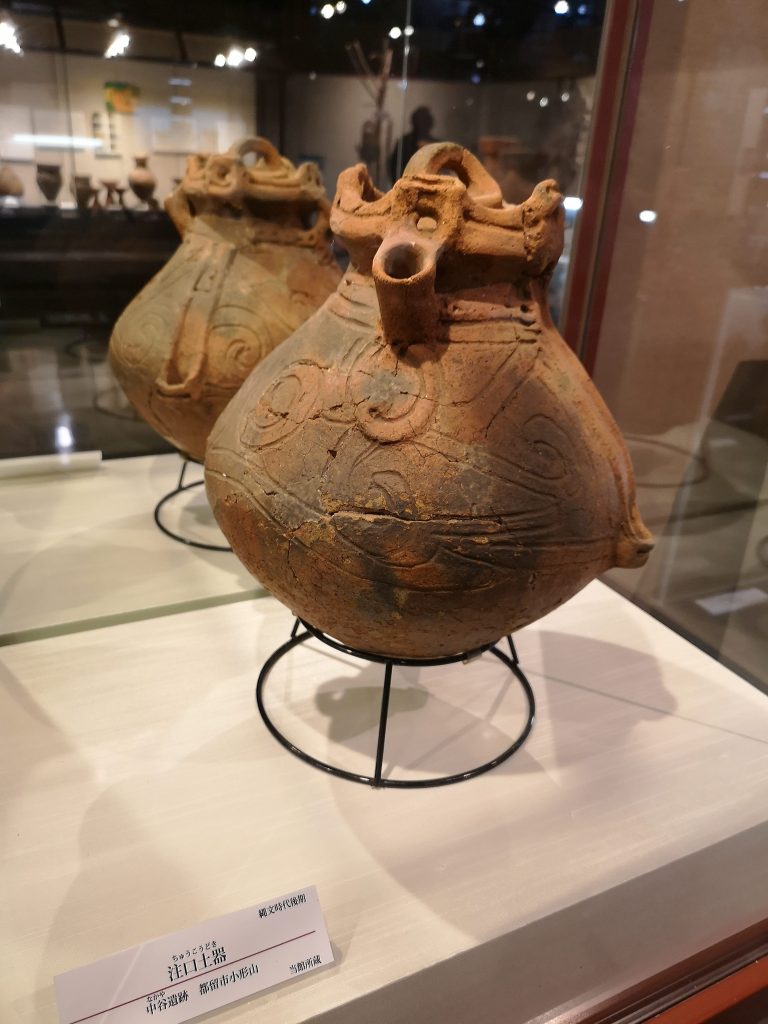
A great number of the Jomon clay figures and earthenware were found in the central highlands between current Nagano and Yamanashi Prefectures. The excavation locations coincided with the locations of obsidian mines.
Shakado Museum of Jomon Culture, 1/23/2022
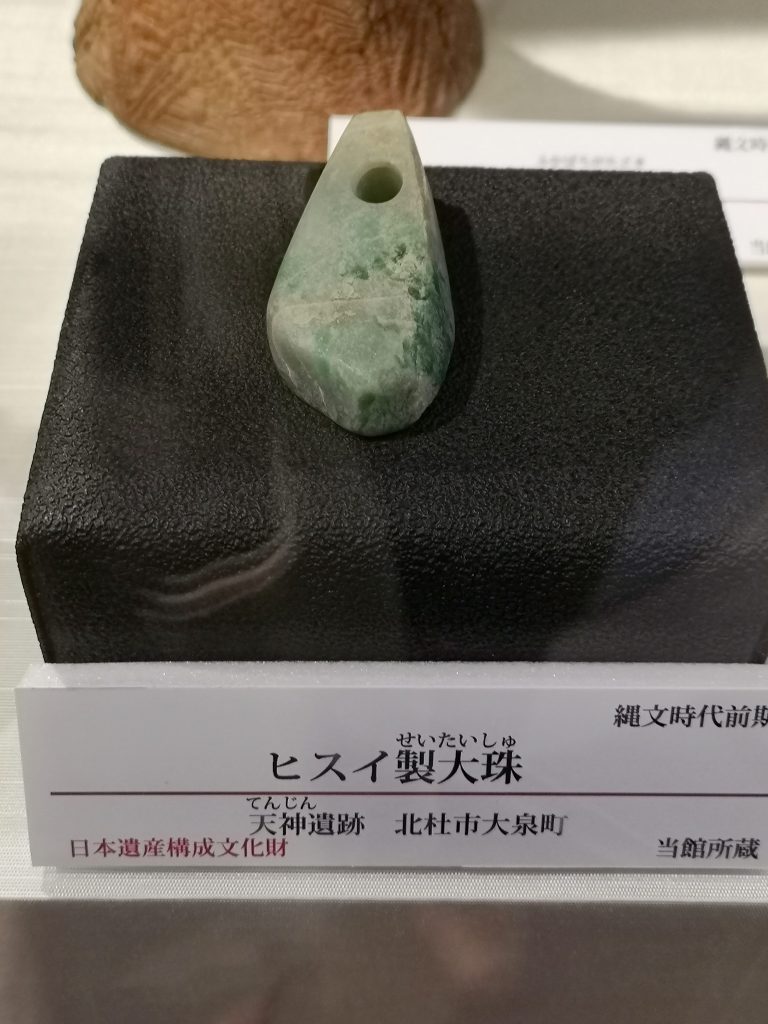
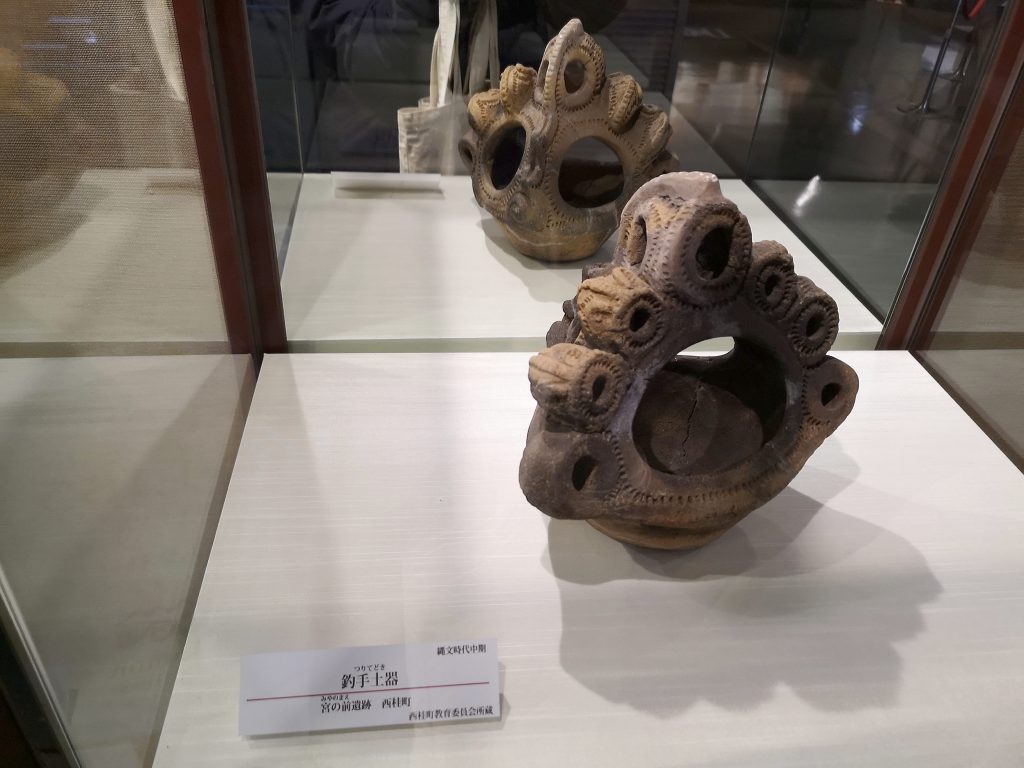
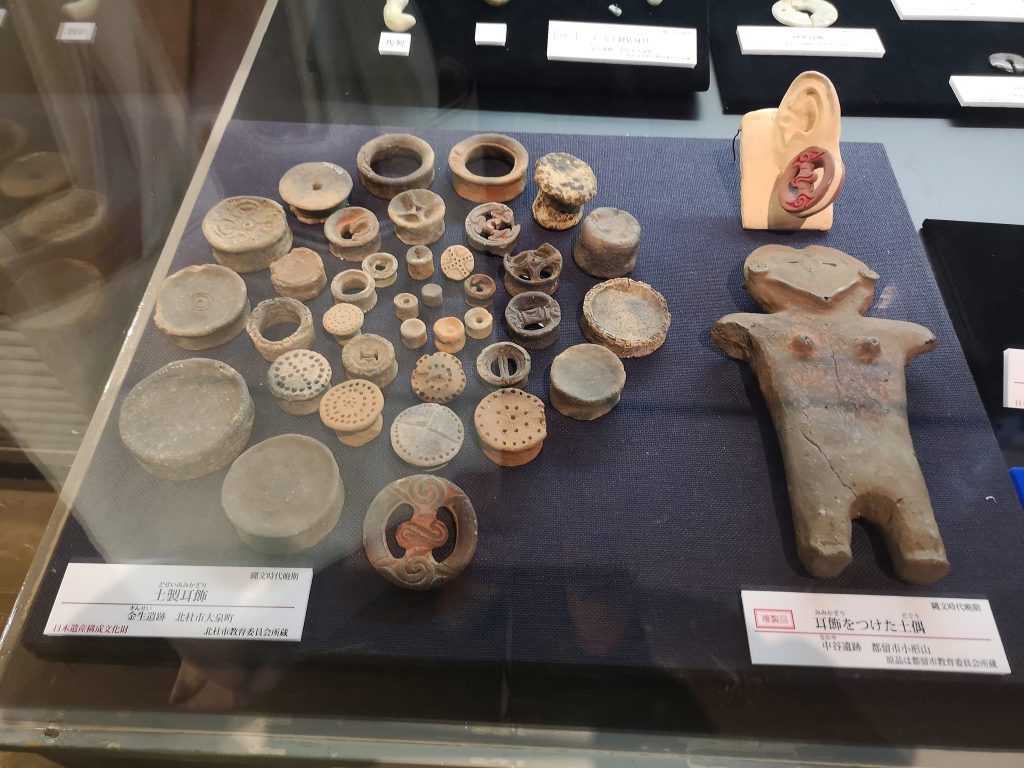
Earthenware vessels with hangers,Shakado Museum of Jomon Culture, Fuefuki-city, Yamanashi, 1/23/2022Deep bowls were thought to be used for alcohol brewing, drumming instruments, or seed storage vessels. Along with daily use earthenware, some ornaments like earrings were found in the early to middle Jomon period. A large necklace made of Jade is also shown. Yamanashi Prefectural Museum of Archaeology, Kofu-city, Yamanashi, 1/23/2022
In the late Jomon period, the earthenware found became simpler than the earlier one. It was thought that the climate had gradually become cooler and the population and number of villages decreased in the central highlands.
Yamanashi Prefectural Museum of Archaeology, Kofu-city, Yamanashi, 1/23/2022
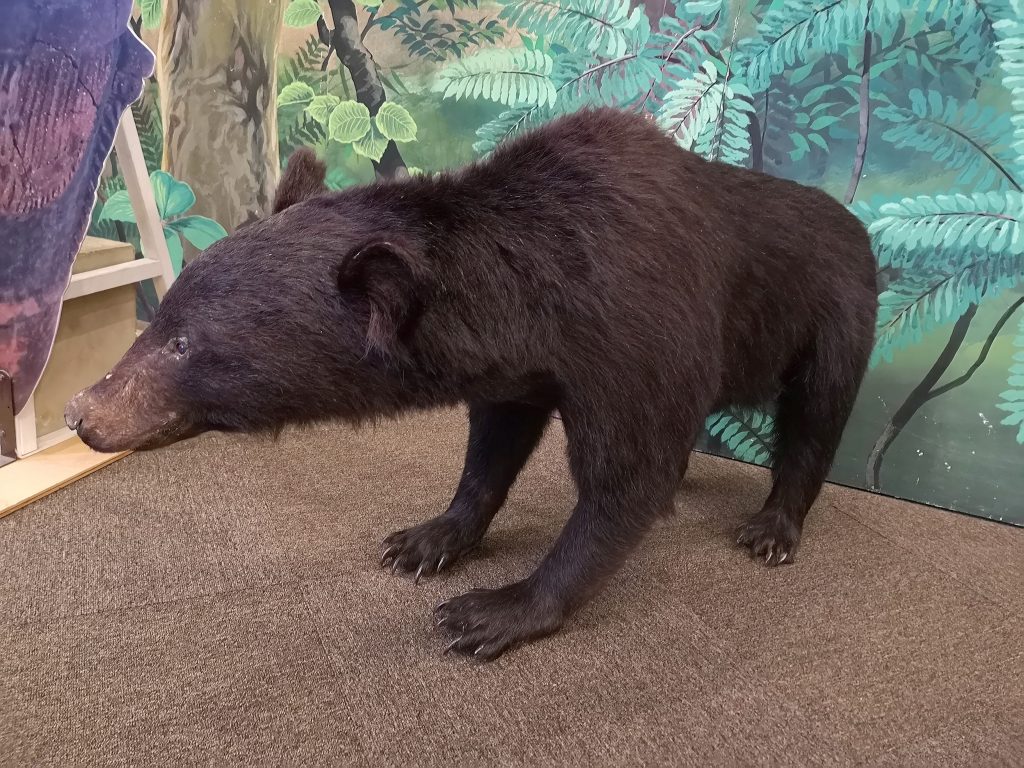
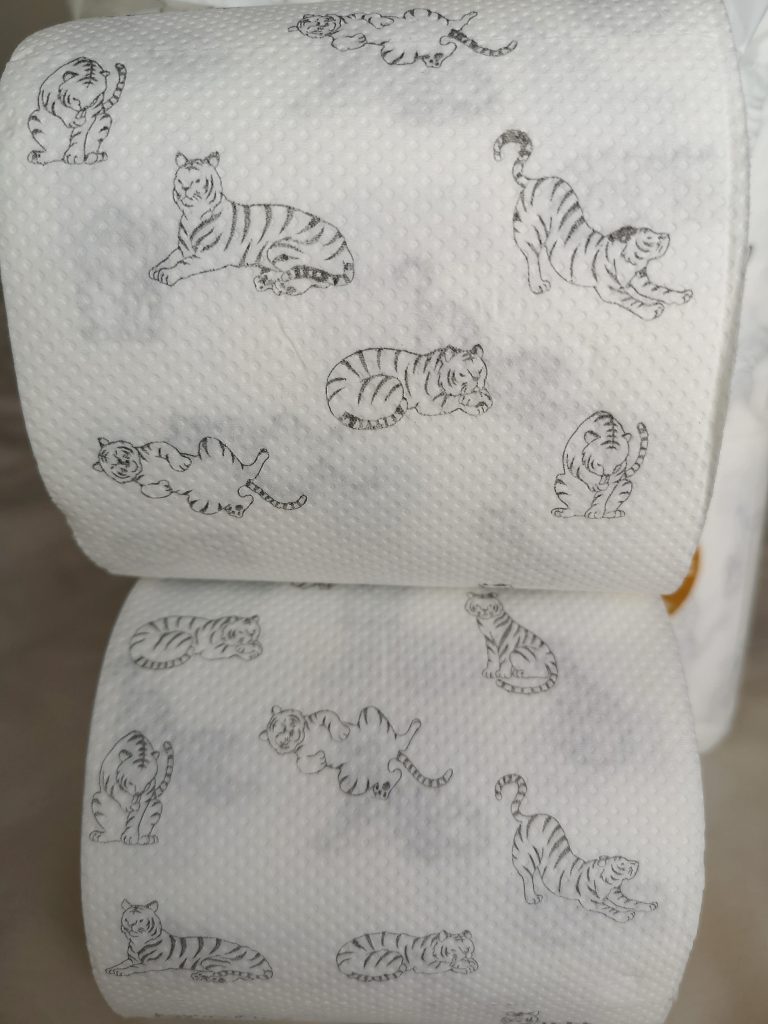
Additional items other than earthenware in the museums
“The Colder The Better, The Fair 2022” The Yatsugatake Area, 01/15~02/22 was canceled on 01/26/2022 from the following day until the last day. Since the Quasi-State of Emergency has been underway in Nagano Prefecture and the number of the omicron variant of Covid-19 has been drastically increasing in Yamanashi Prefecture, this year’s fair ended prematurely. The streets of the major town of the event in the Kiyosato district of the town of Takane, the city of Hokuto, in Yamanashi Prefecture was dead quiet on 01/30/22.
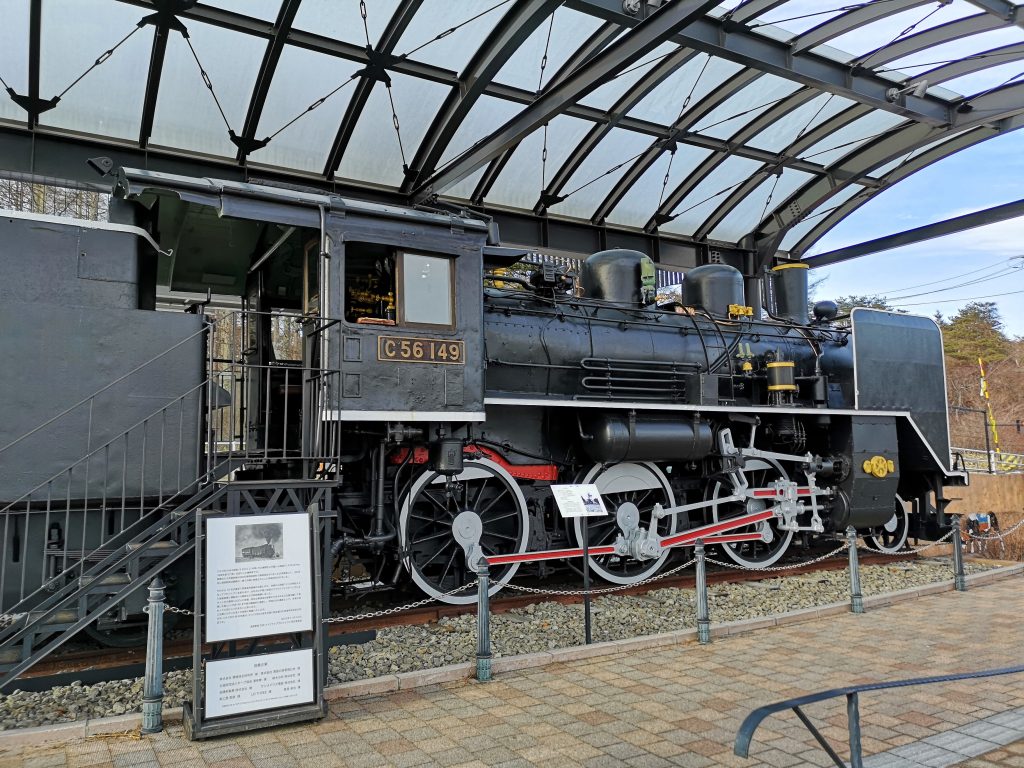
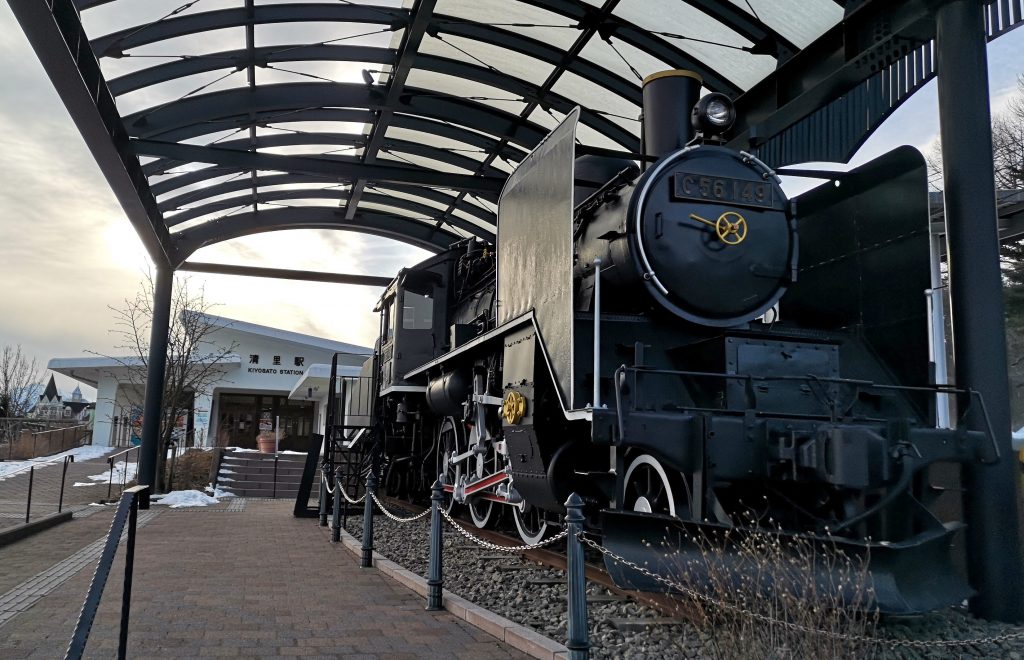
The C56149 steam railcar built in 1938 being exhibited at Kiyosato Station was running between Kobuchisawa, Yamanashi Prefecture and Komoro, Nagano Prefecture in the JR Koumi Line. There is the highest point on any JR line near Nobeyama Station; the elevation is 1,375m. The steam engines in the line were terminated in 1972. One of the C56149 railcars was repaired and transported to the current place in 2009.
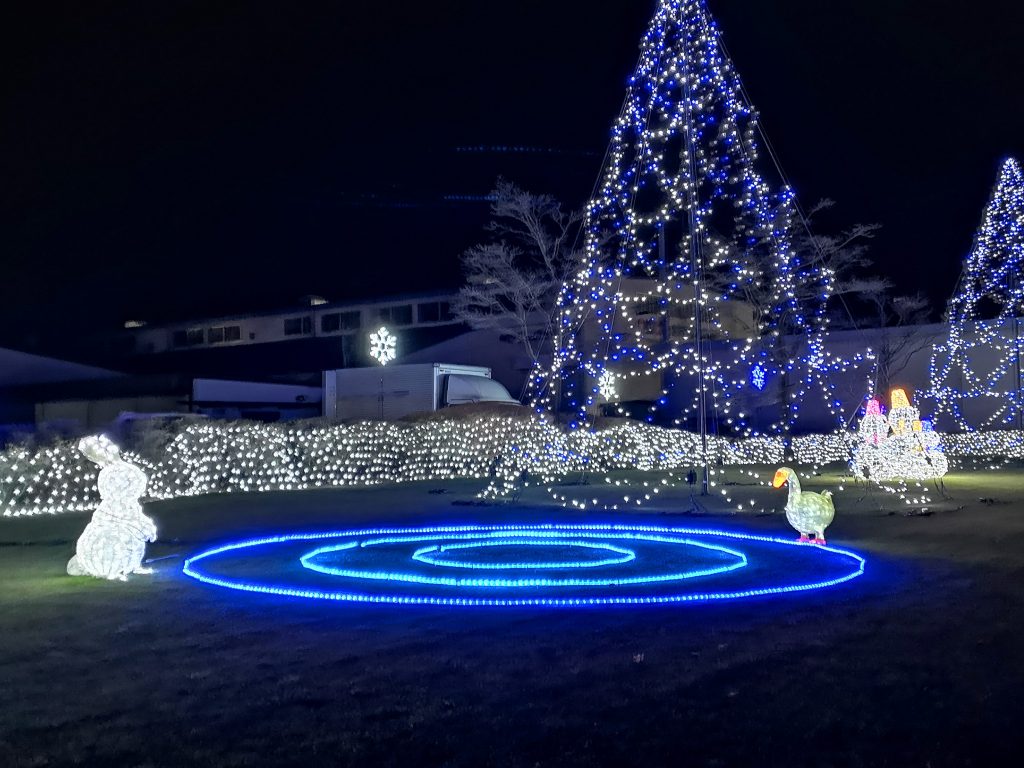
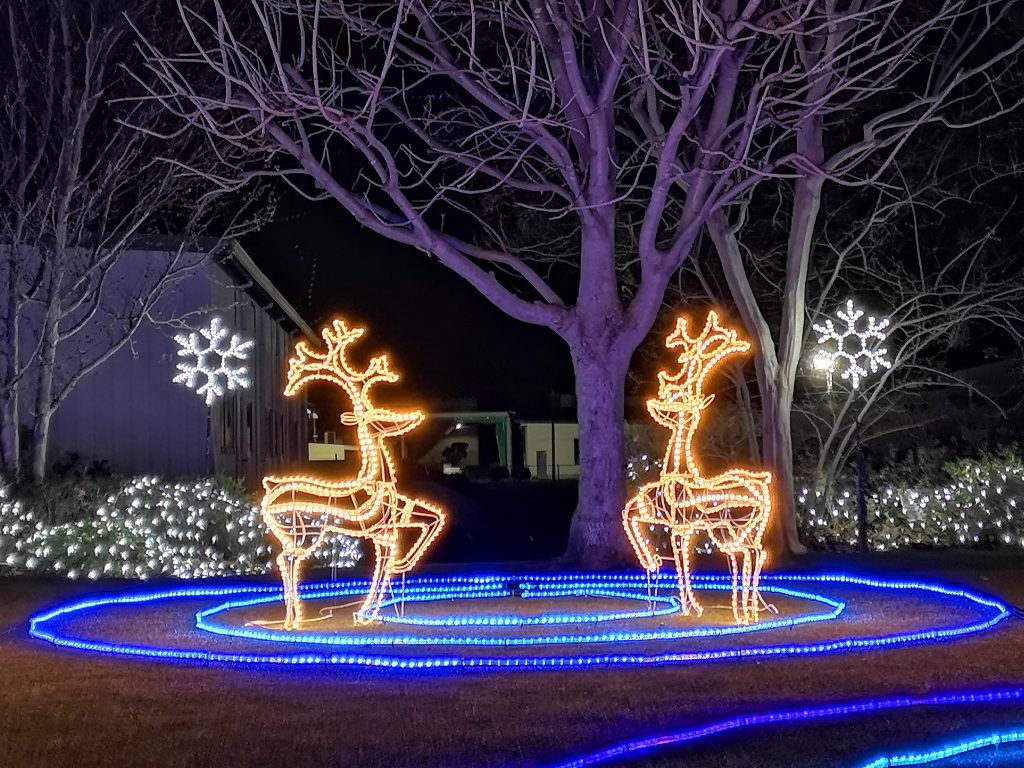
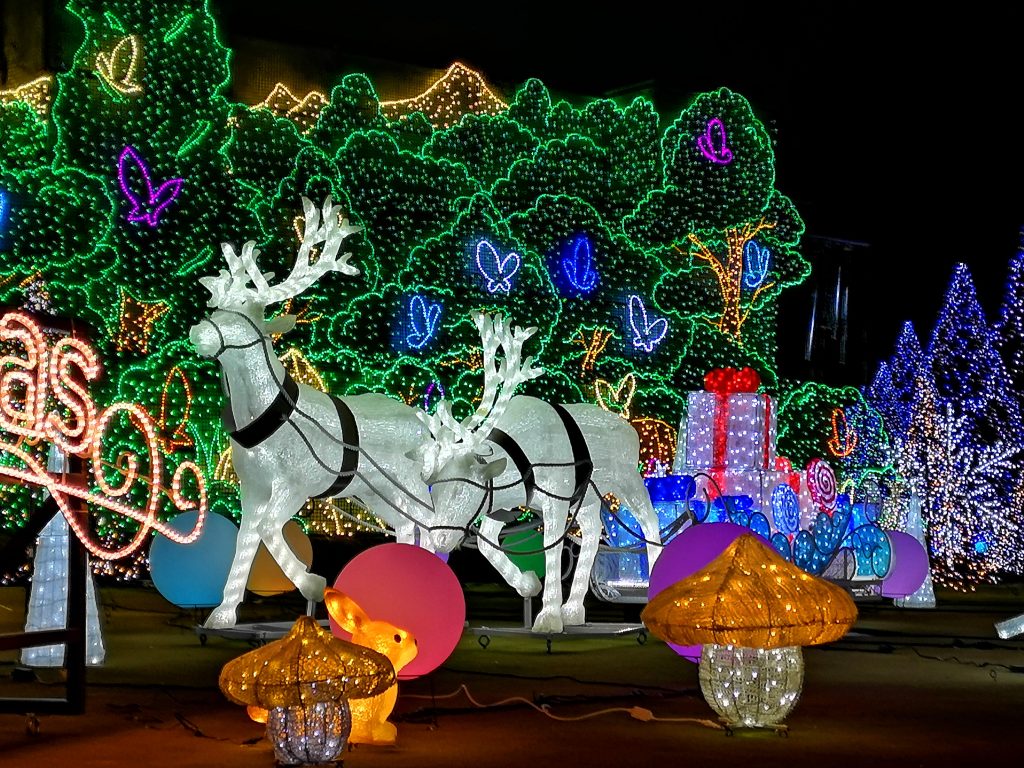
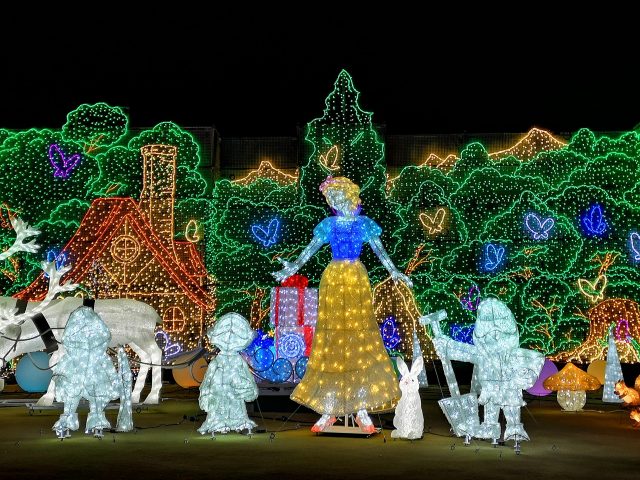
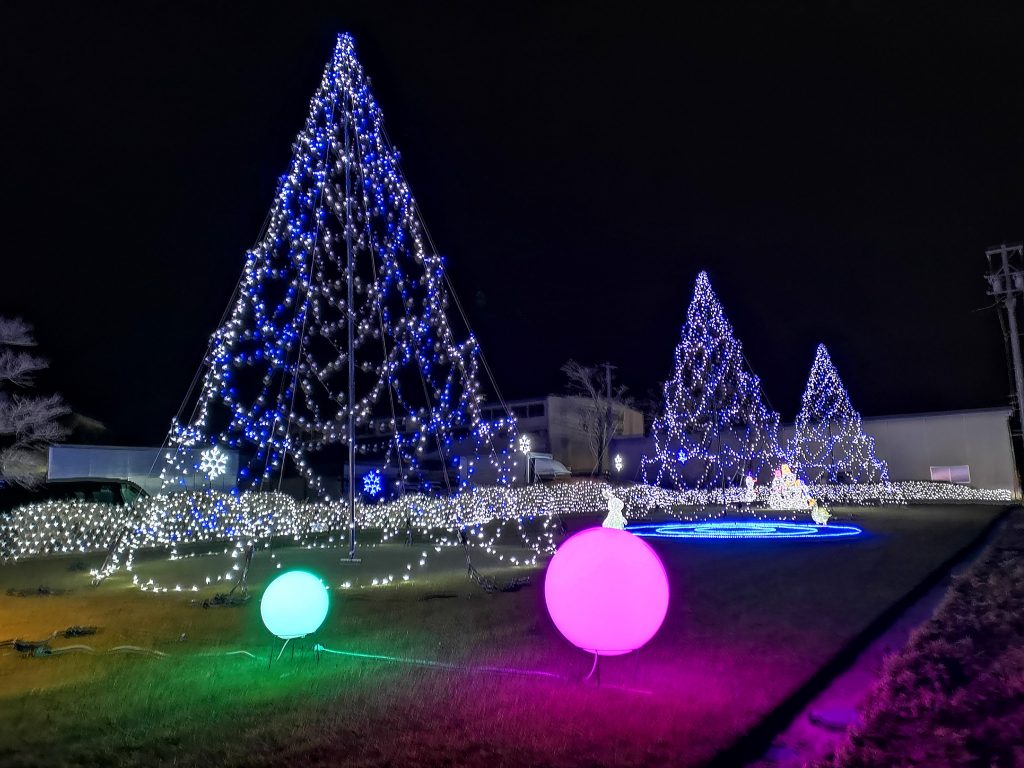
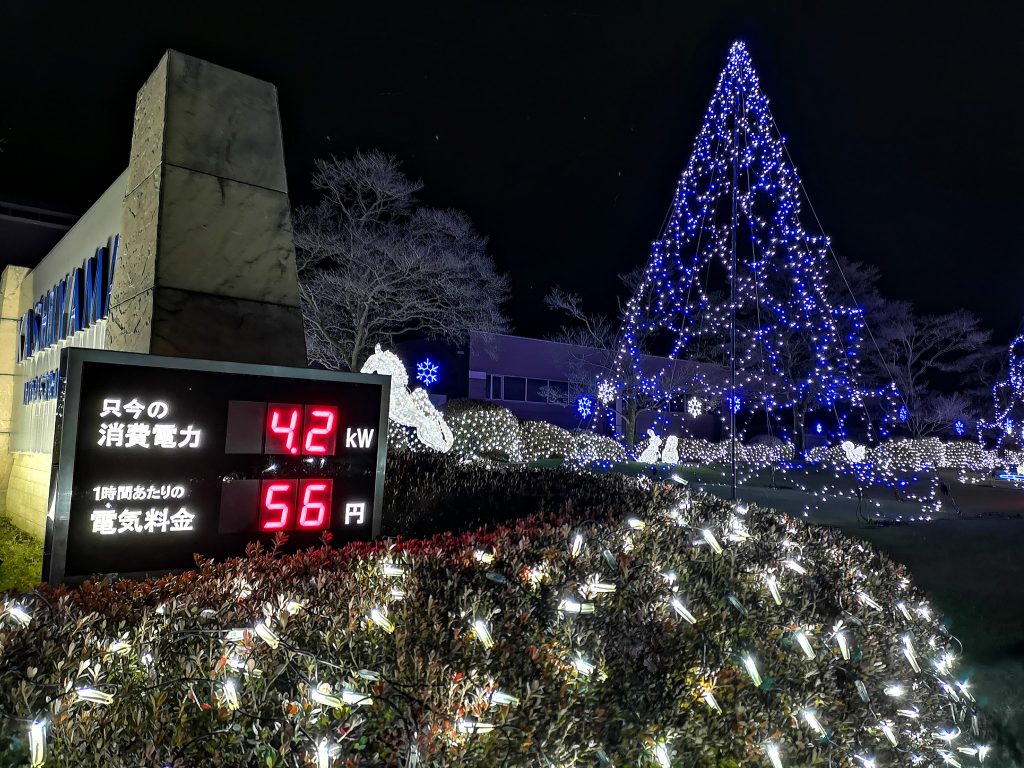
Really amazing! According to the company’s home page, this is the 17th year to hold this illumination event. The theme of this year is “Snow White in The Woods With Animals.” Since light emitting diode (LED) lamps are used, relatively less power is being consumed [4.2 kW, 56 yen/hr]. (https://illuminate.jp)
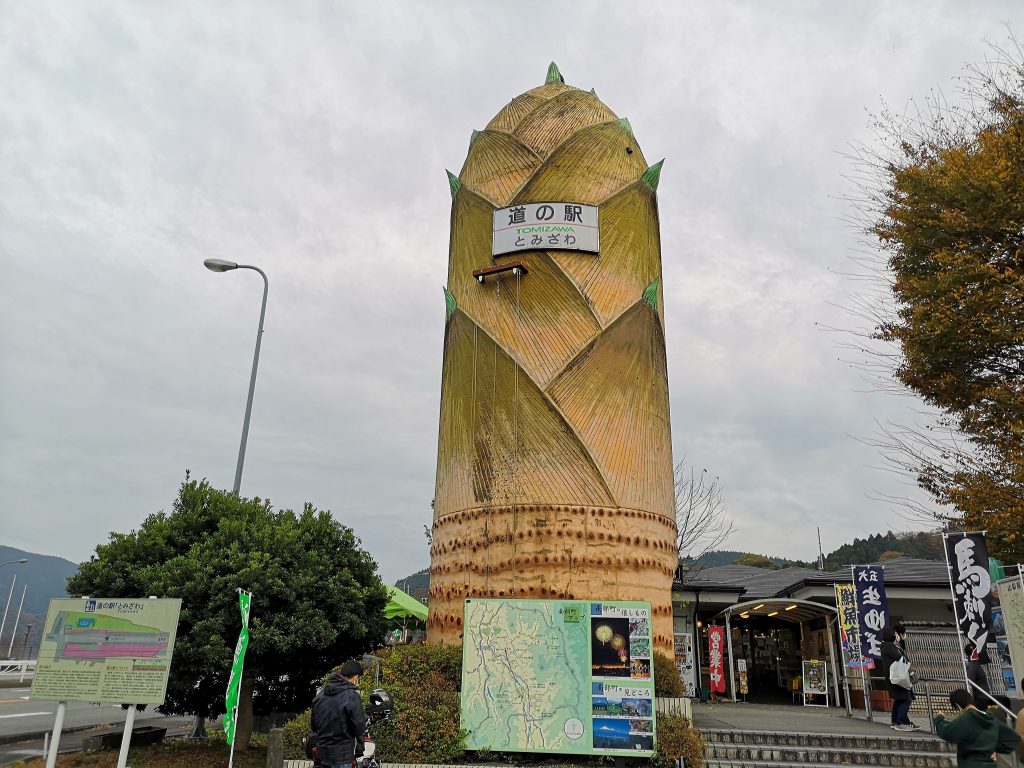
Nanbu-cho (the town of Nanbu) is located in the southernmost part in Yamanashi Prefecture, Japan. The name of the town was derived from the Nanbu clan, a Japanese samurai clan, and is related to Nanbu town in Aomori prefecture.
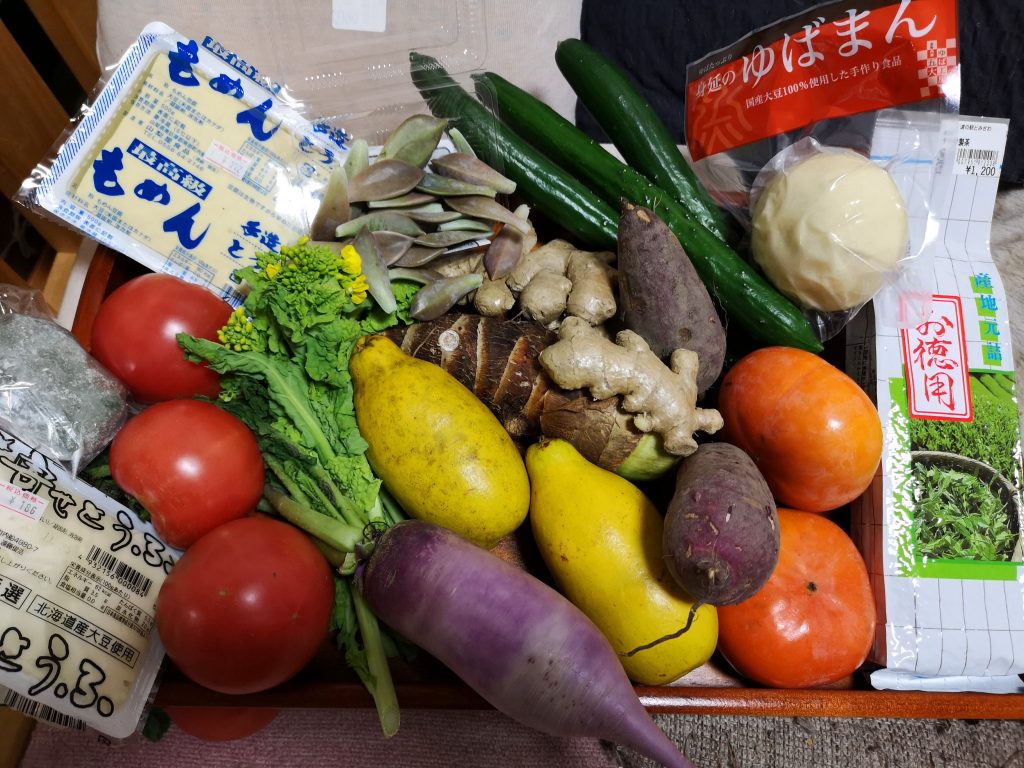
Nanbu town is known for its moderate climate and famous for its bamboo shoots, tea, ginger and other agricultural produce in Yamanashi Prefecture.
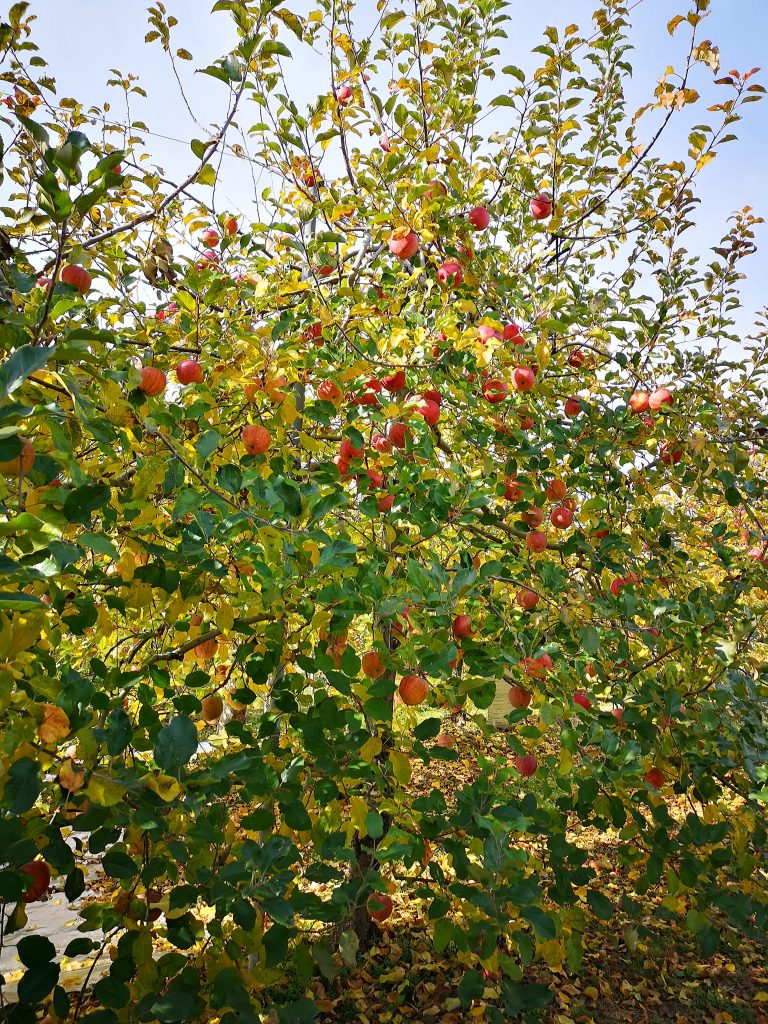
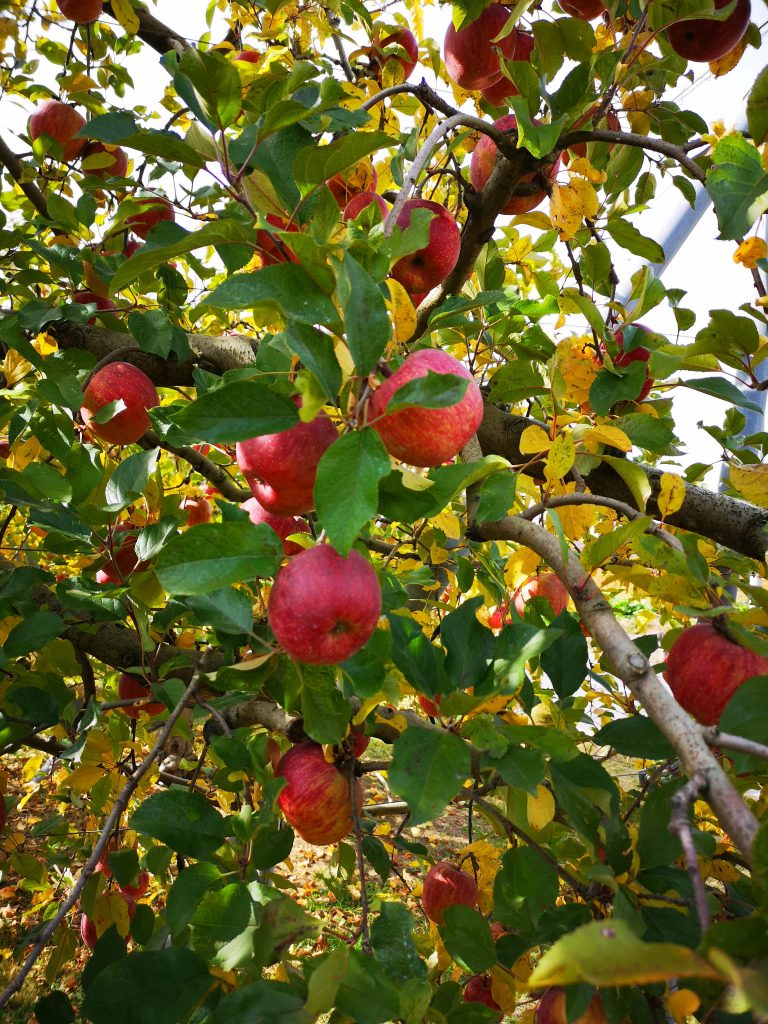
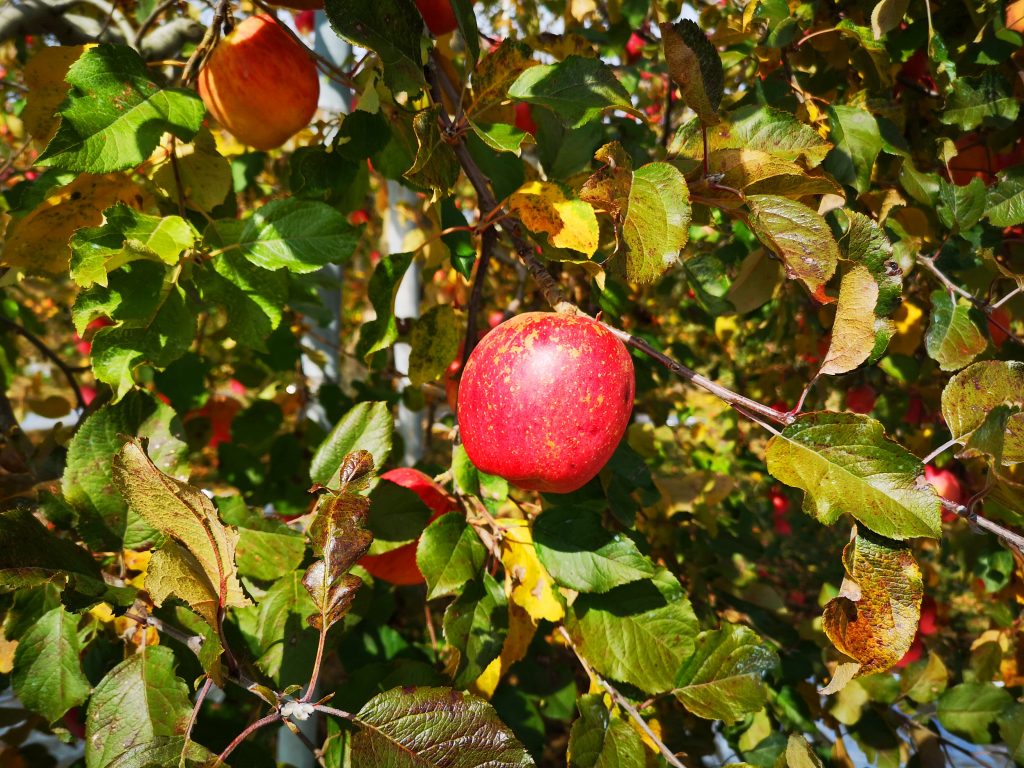
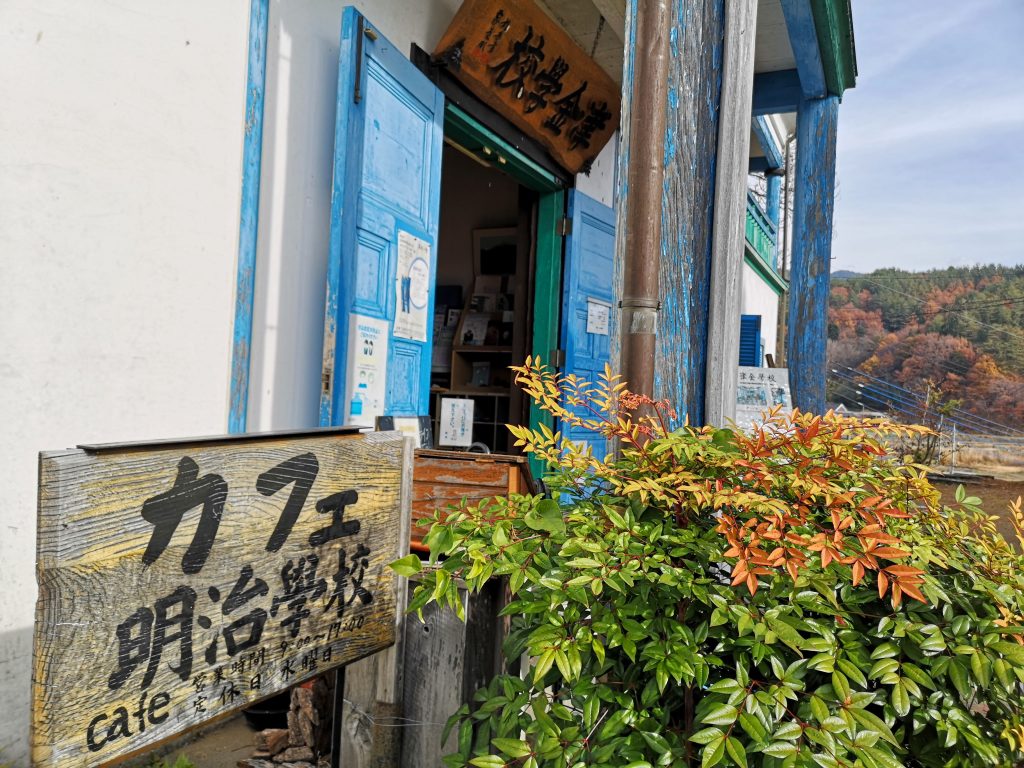
The Tsugane region in the town of Sutama, the city of Hokuto, in Yamanashi Prefecture, used be well-known for its apple production. However, because of its reduced population and the aging community, the number of apple growers and the area of apple orchards have decreased drastically, and it is very difficult to find Tsugane produced apples these days.
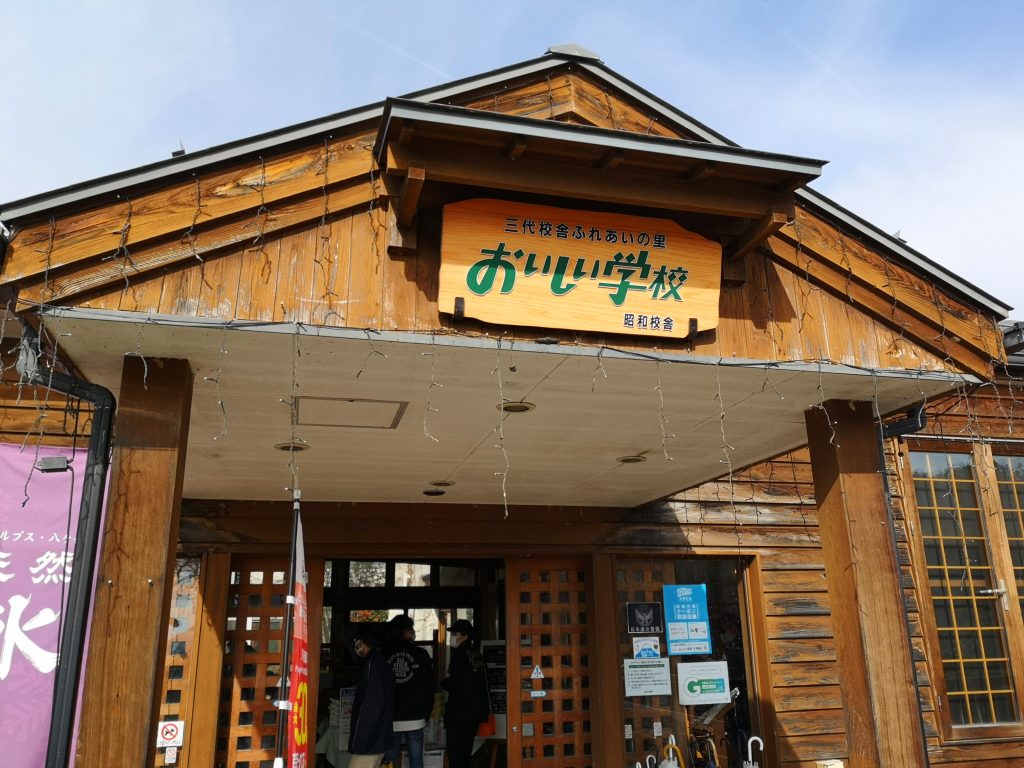
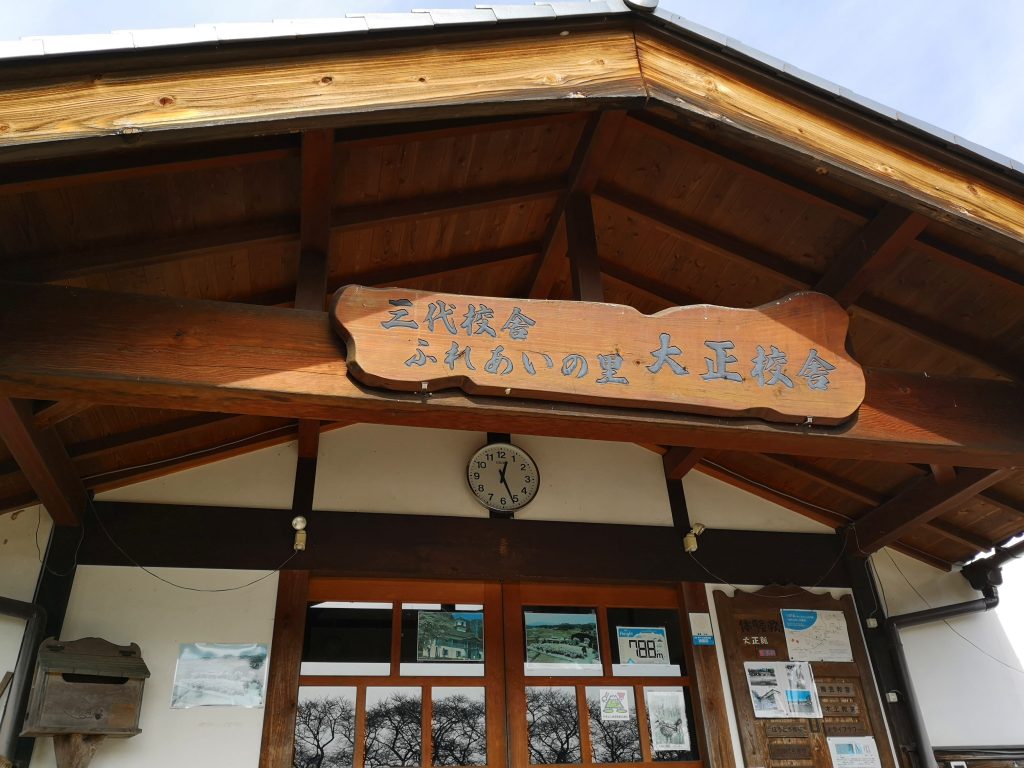
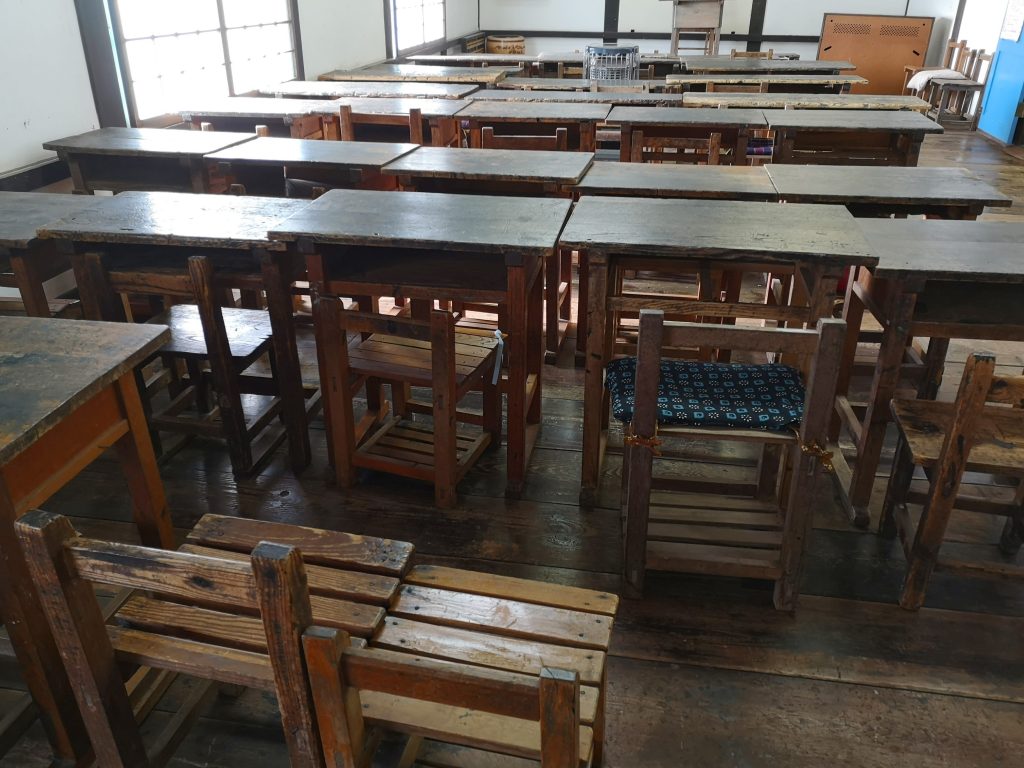
At Oishii Gakkou (literally meaning “delicious school”) in Sutama town, you can purchase some agricultural produce grown in the Tsugane region. And also, you can enjoy local vegetables and bread in the restaurants and the bakery. There are accommodation facilities as well, so you can stay there and experience some local activities if you want.
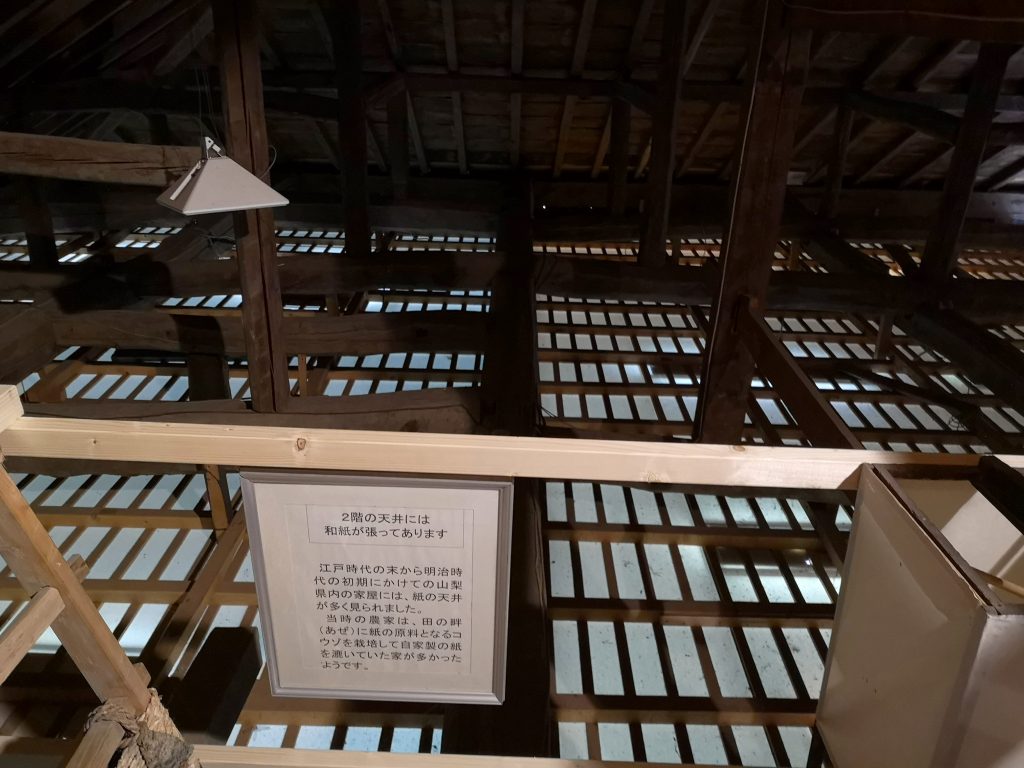
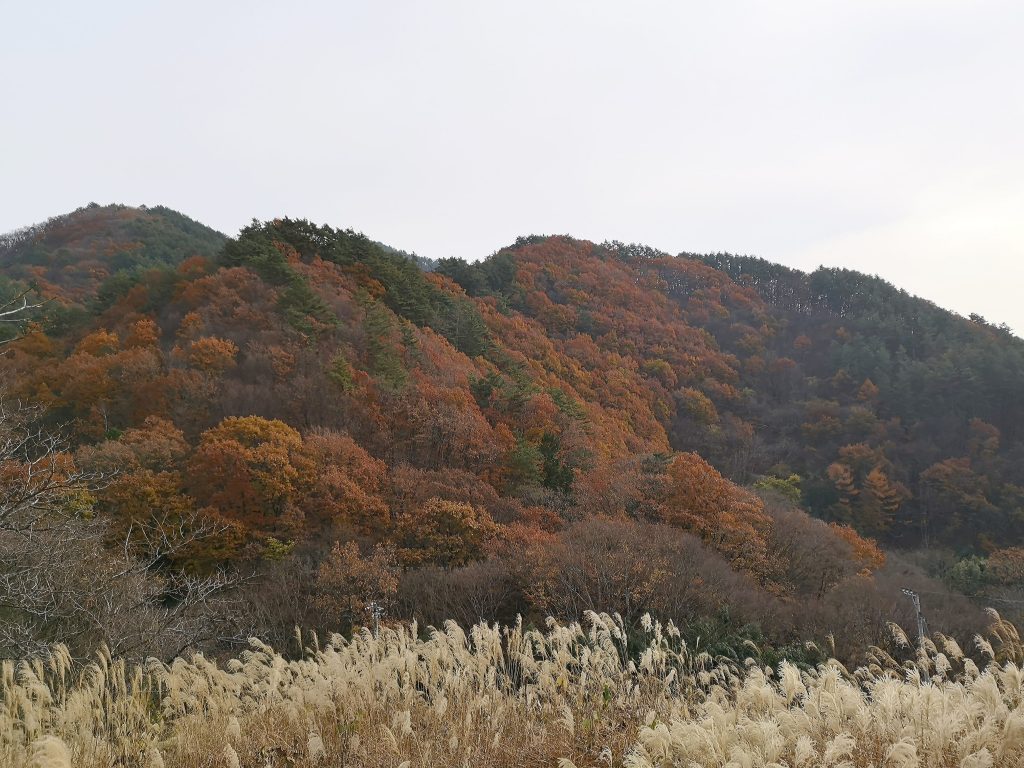
Apple Trees, Tsugane, Hokuto-city, Yamanashi, 11/21/2021Oishii Gakkou From the Showa and Taisho Period, Tsugane, Hokuto-city, Yamanashi, 11/21/2021Oishii Gakkou From the Meiji Period, Tsugane, Hokuto-city, Yamanashi, 11/21/2021 Washi Paper Used for the Ceiling, Tsugane Gakkou-Meiji Period; Autumn View, Tsugane, Hokuto-city, Yamanashi, 11/21/2021
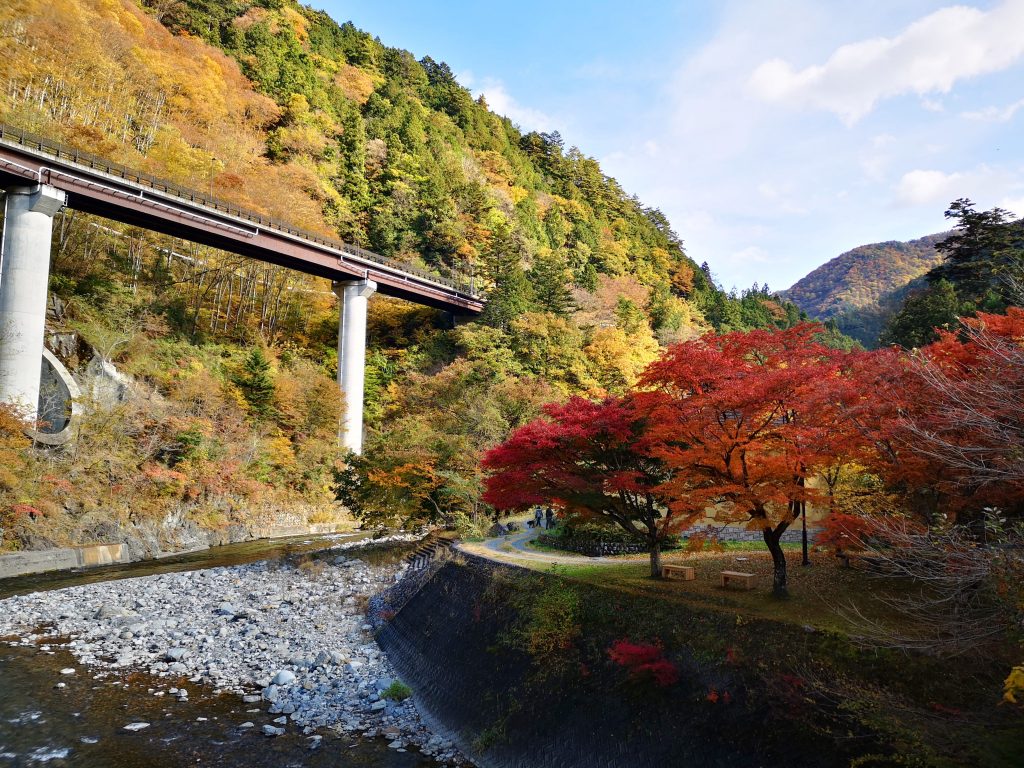
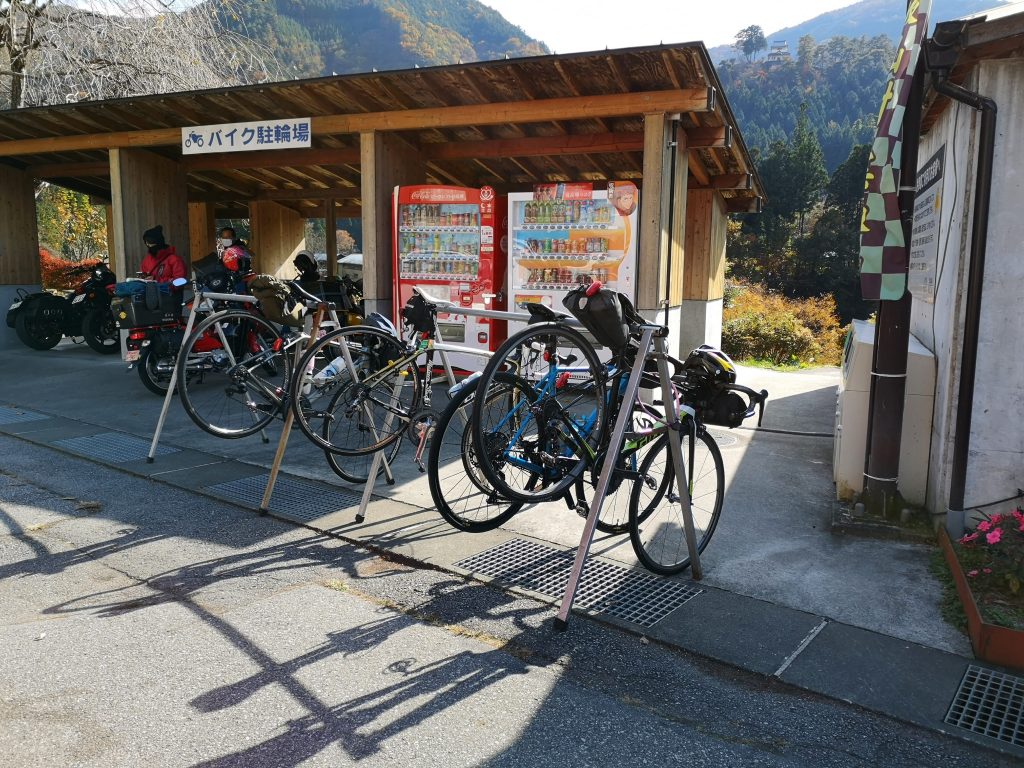
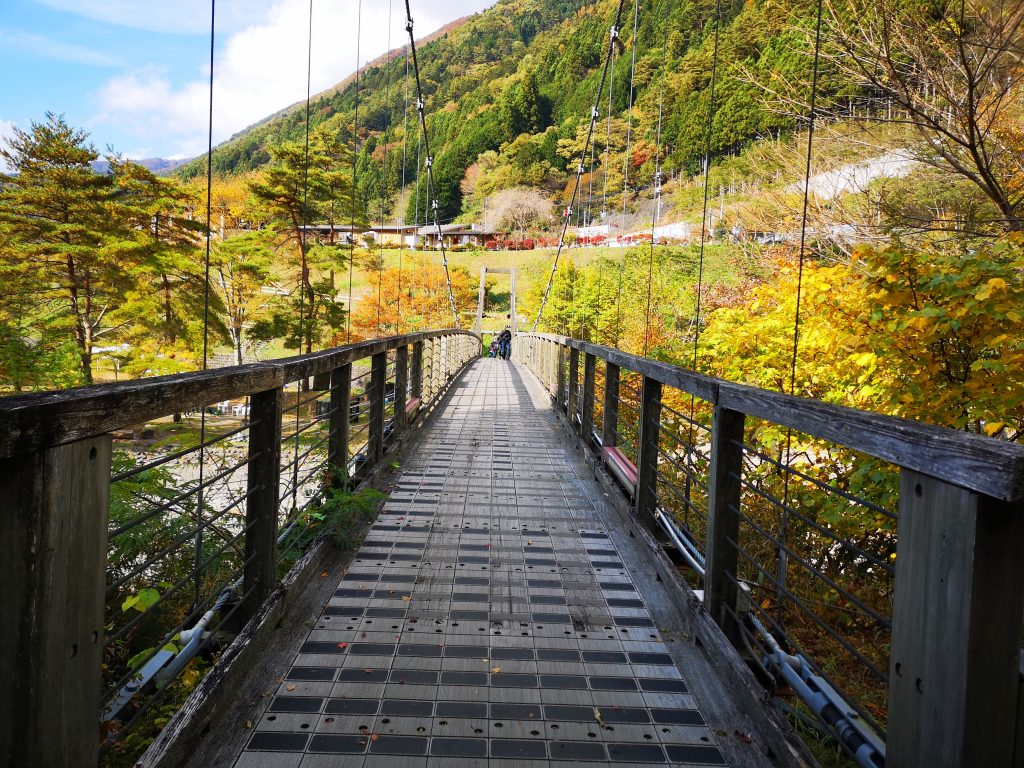
Tabayama-mura (the village of Tabayama) and Kosuge-mura (the village of Kosuge) are located in the mountainous northeastern corner of Yamanashi prefecture. Both villages have nice camping sites and are good for fishing and other outdoor activities. Route 411 connecting Hachioji and Oku-Tama, Tokyo and Koshu, Yamanashi runs through Tabayama. It is a very popular motorcycle road in the same as Doshi-michi (road), Route 413. It is also very popular for bikers (cyclists). It was a fine autumn day, so there were a lot of motorcyclists and enough bikers. Prefecture Road 18 connects Tabayama to Kosuge and joins Route 139. These areas provide the water resource to the Oku-Tama area.
An event on “Hunting and Cooking Deer” and “Outdoor Sauna” was held in Michi-no-Eki (Road Station) Tabayama on November 6-7, 2021.
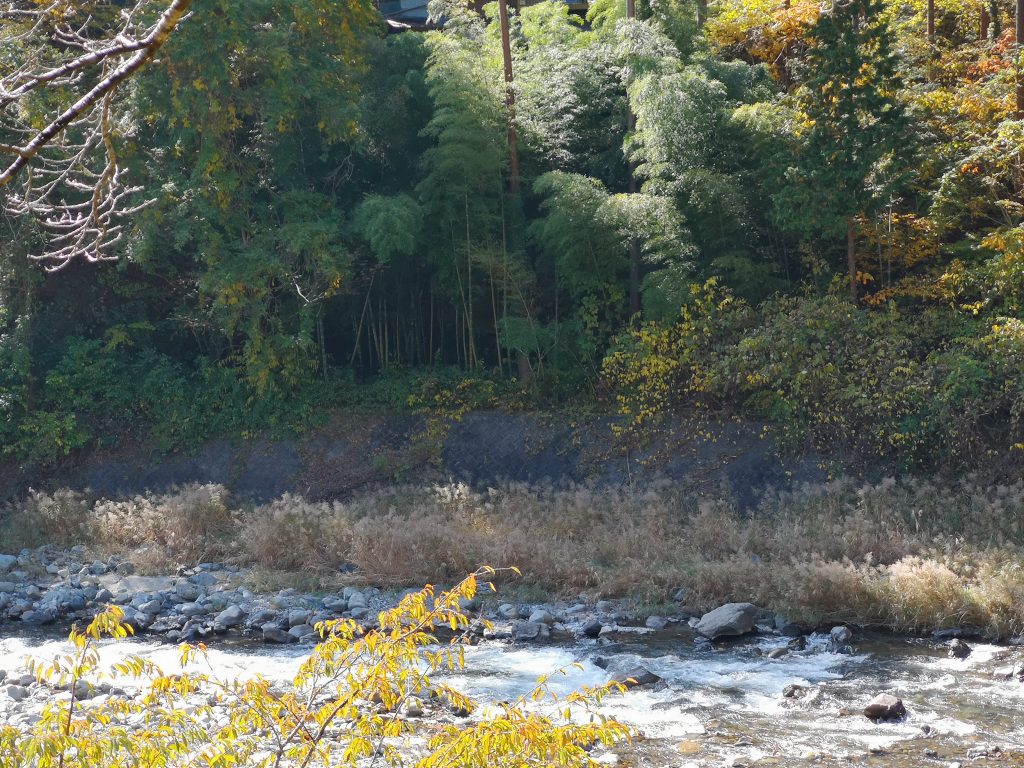
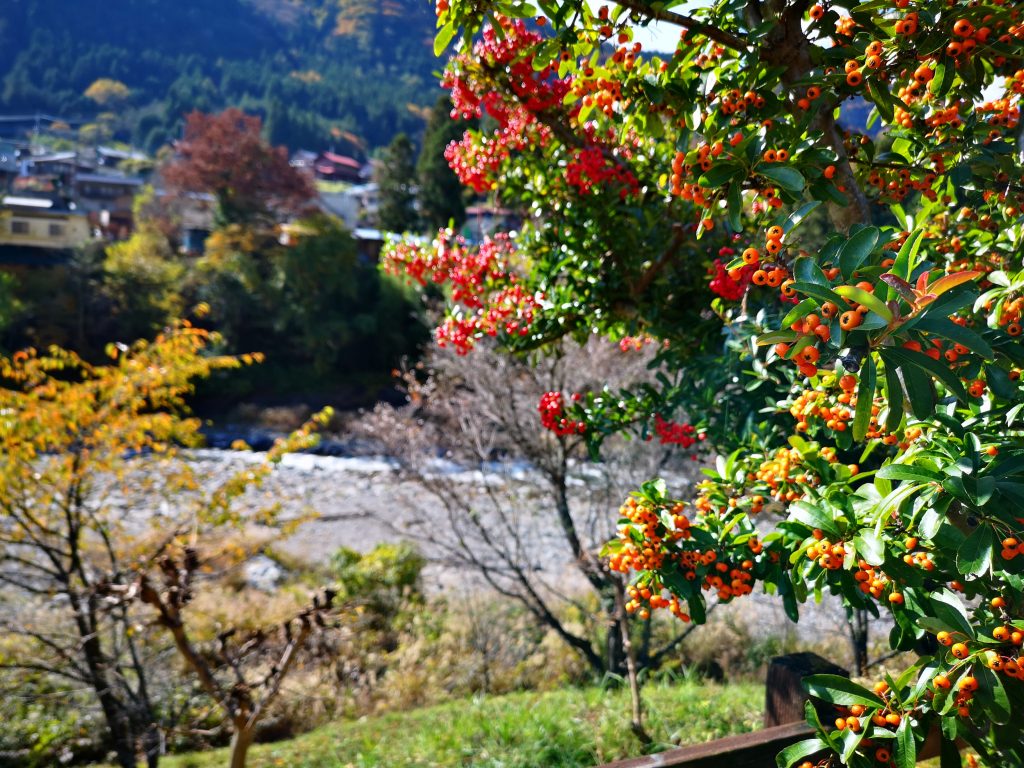
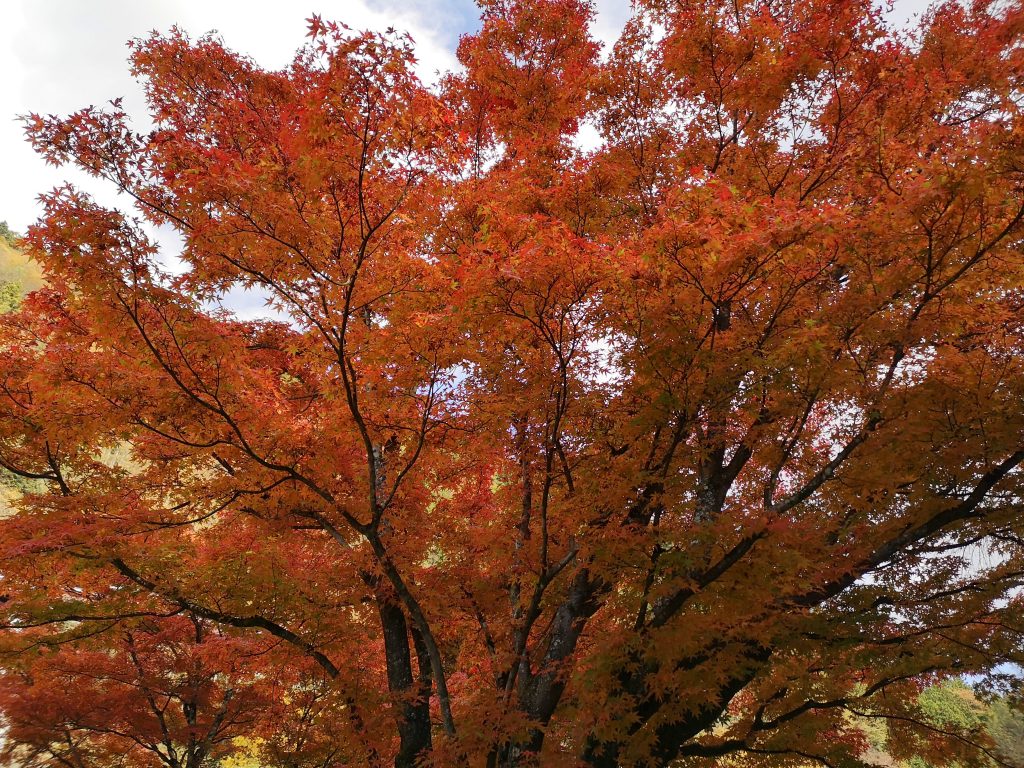
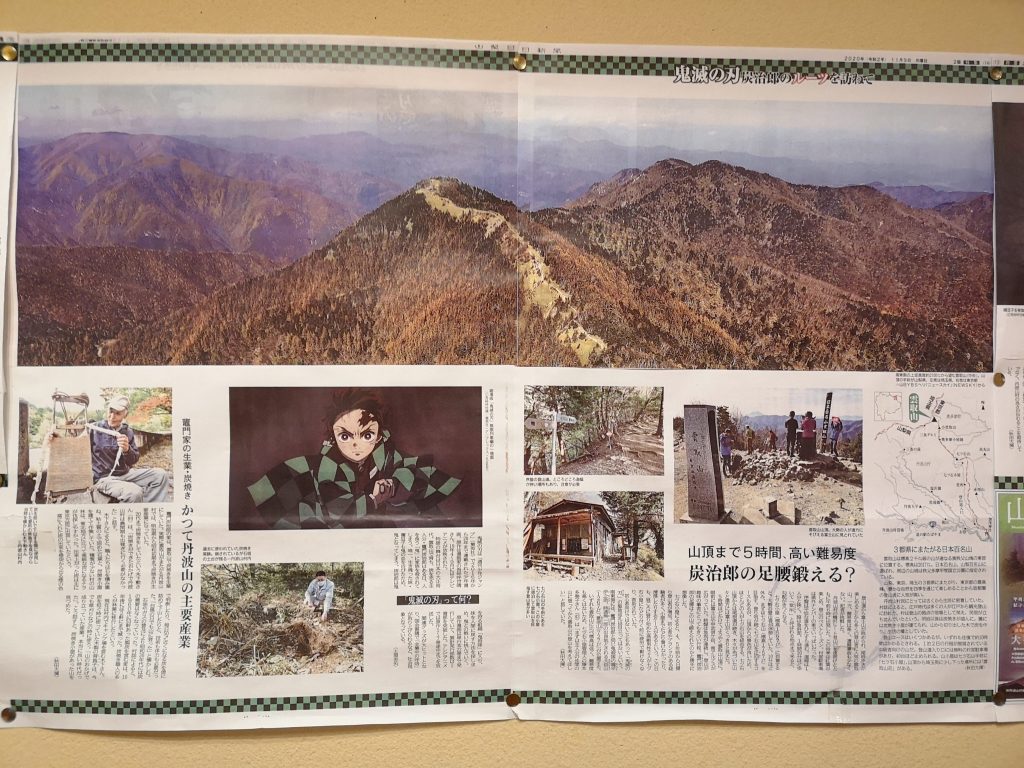
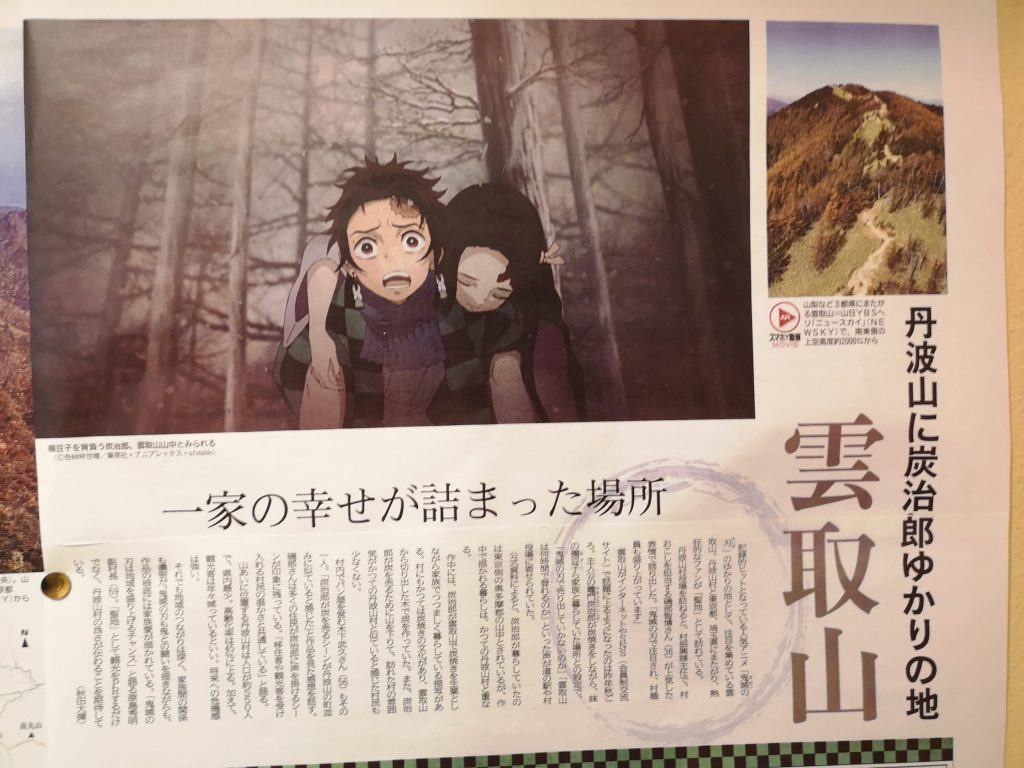
The Taba River, Tabayama-village, Yamanashi, 11/06/2021 Pyracantha and Bikes, Road Station Tabayama, Tabayama-village, Yamanashi, 11/06/2021Maple Tree and Suspension Bridge, Hot Spring Nomekoi, Tabayama-village, Yamanashi, 11/06/2021Demon Slayer Article, Yamanashi Daily News Paper, Hot Spring Nomekoi, Tabayama-village, Yamanashi, 11/06/2021
In a very popular anime and manga story Demon Slayer (Kimetsu No Yaiba), the main character Tanjiro made a living selling charcoal in the Mt. Kumotori area, most likely in the Oku-Tama side. https://kimetsu.com/
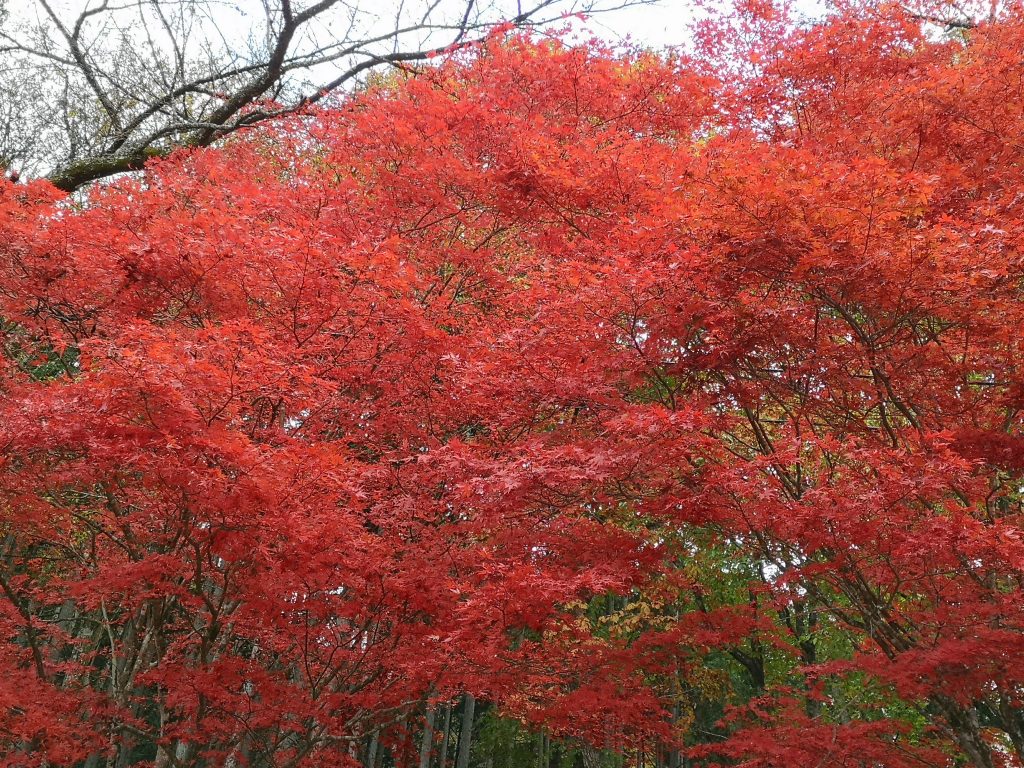
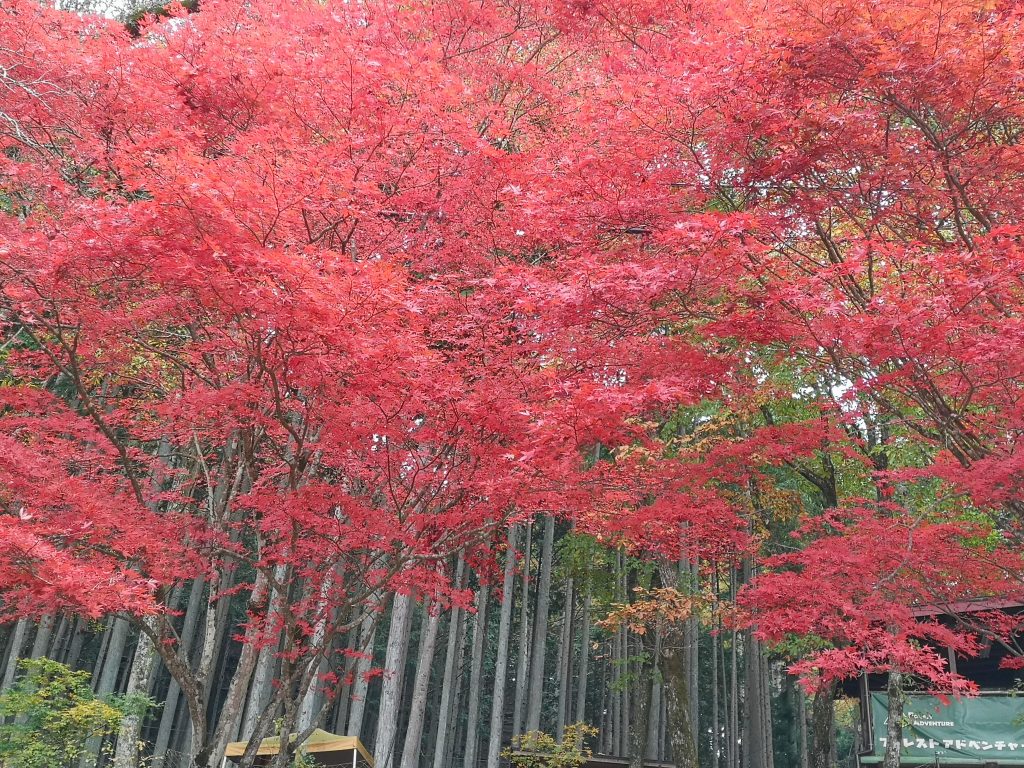
Maple Trees, Road Station Kosuge, Kosuge-village, Yamanashi, 11/06/2021
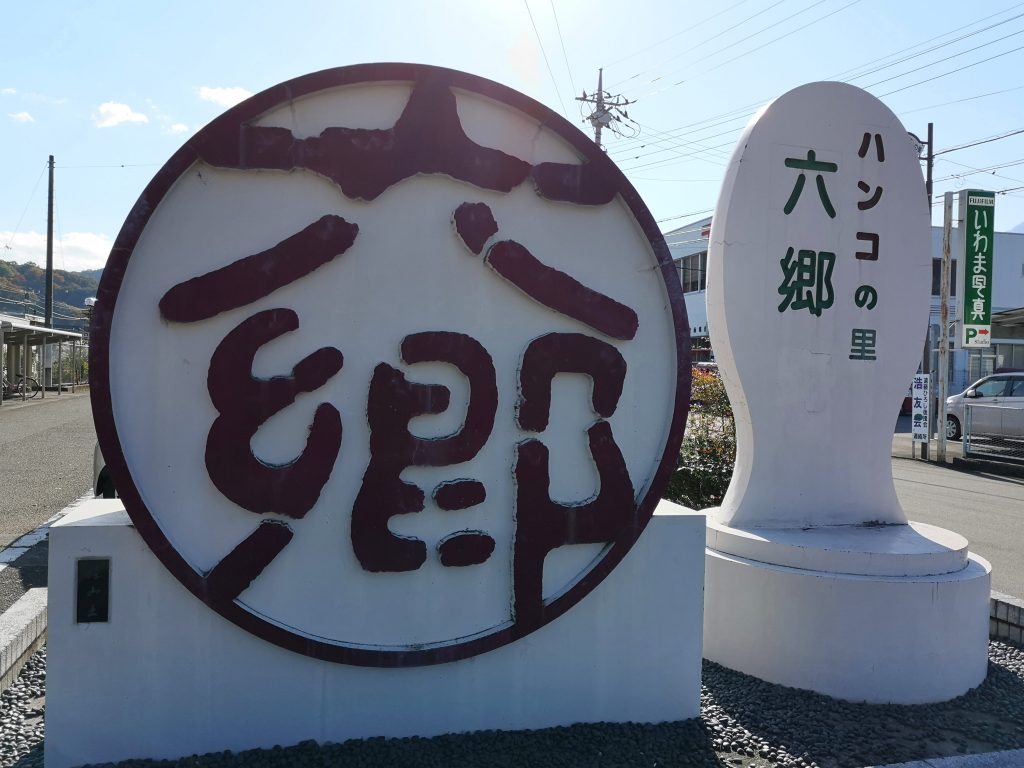
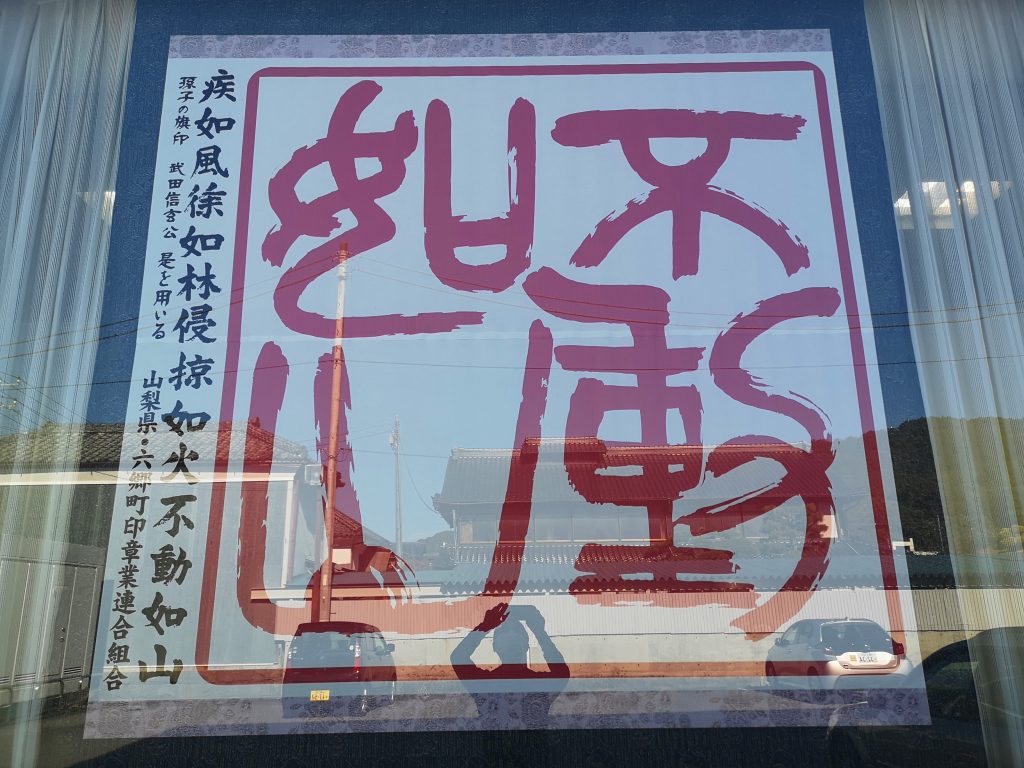
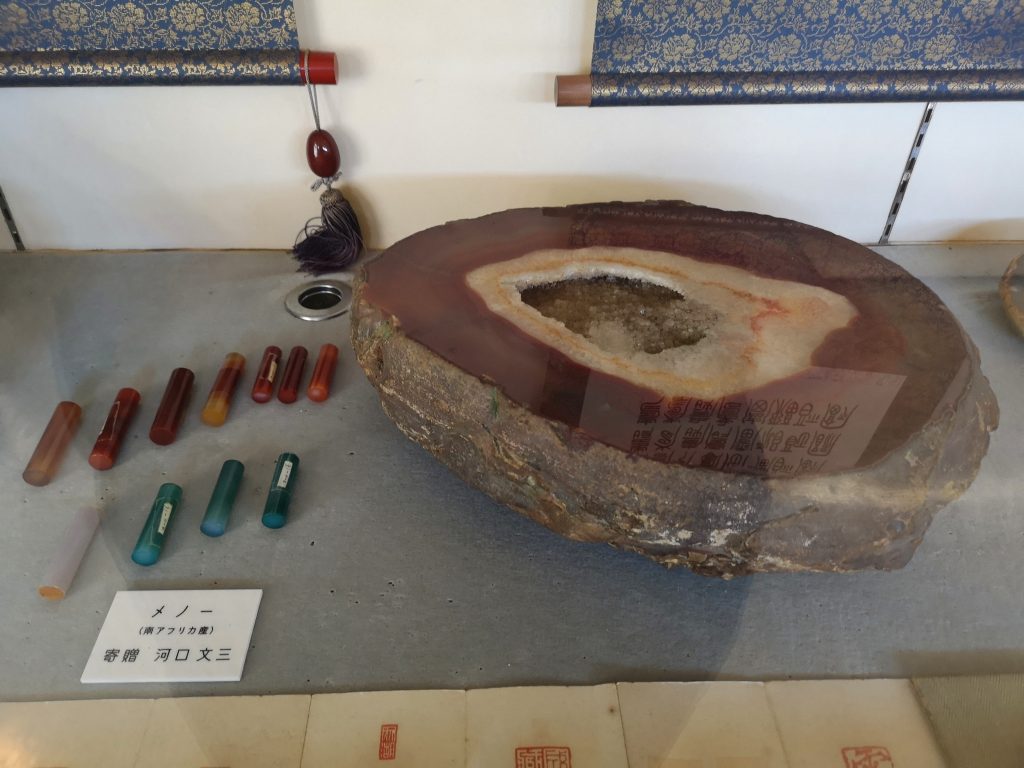
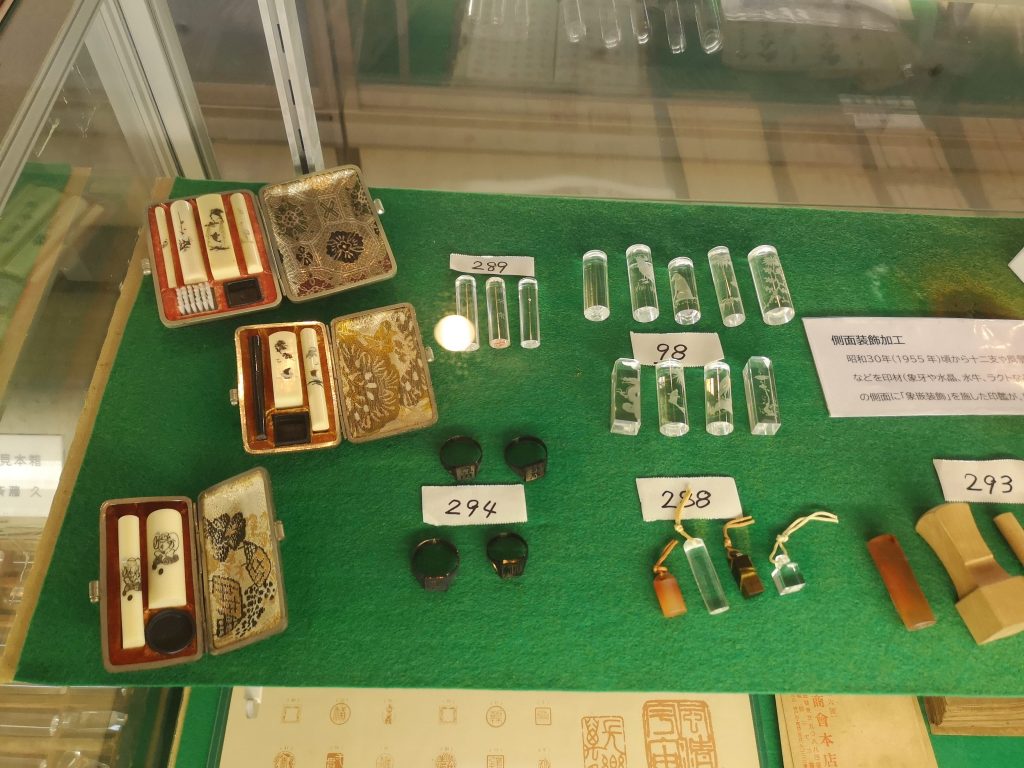
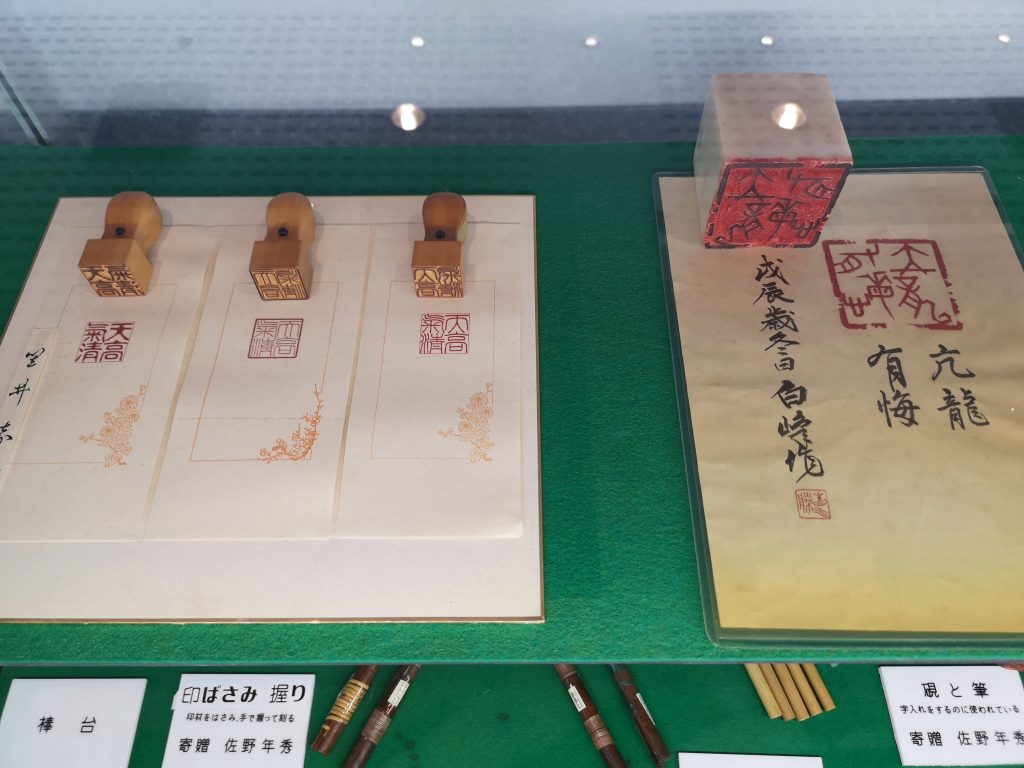
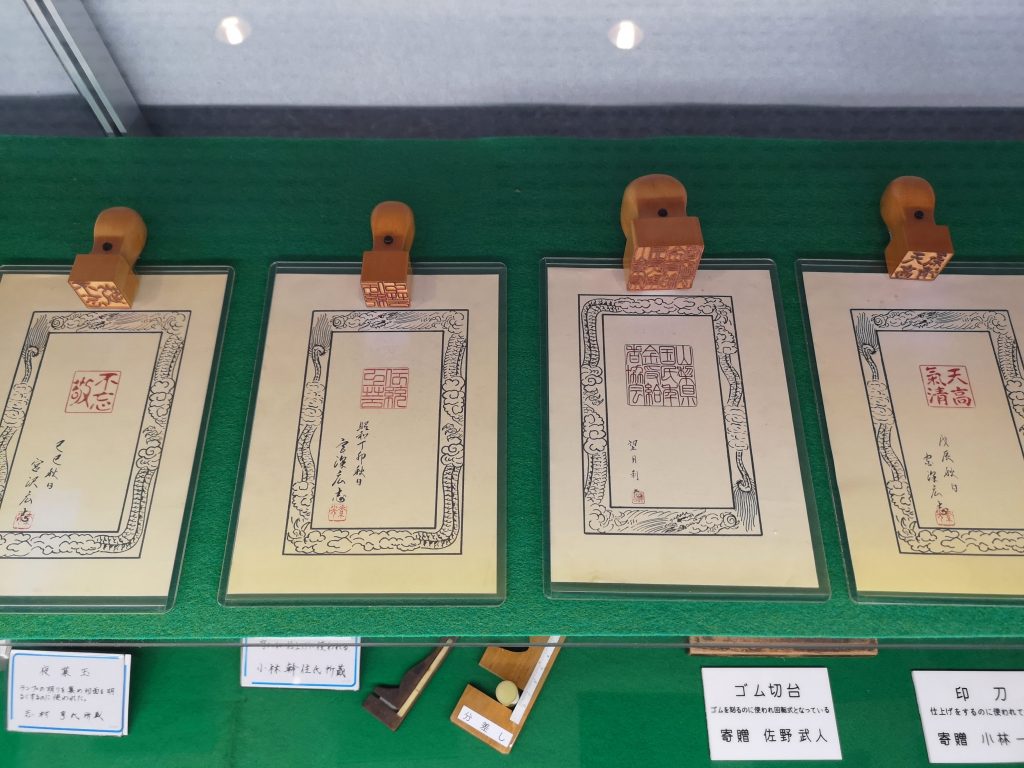
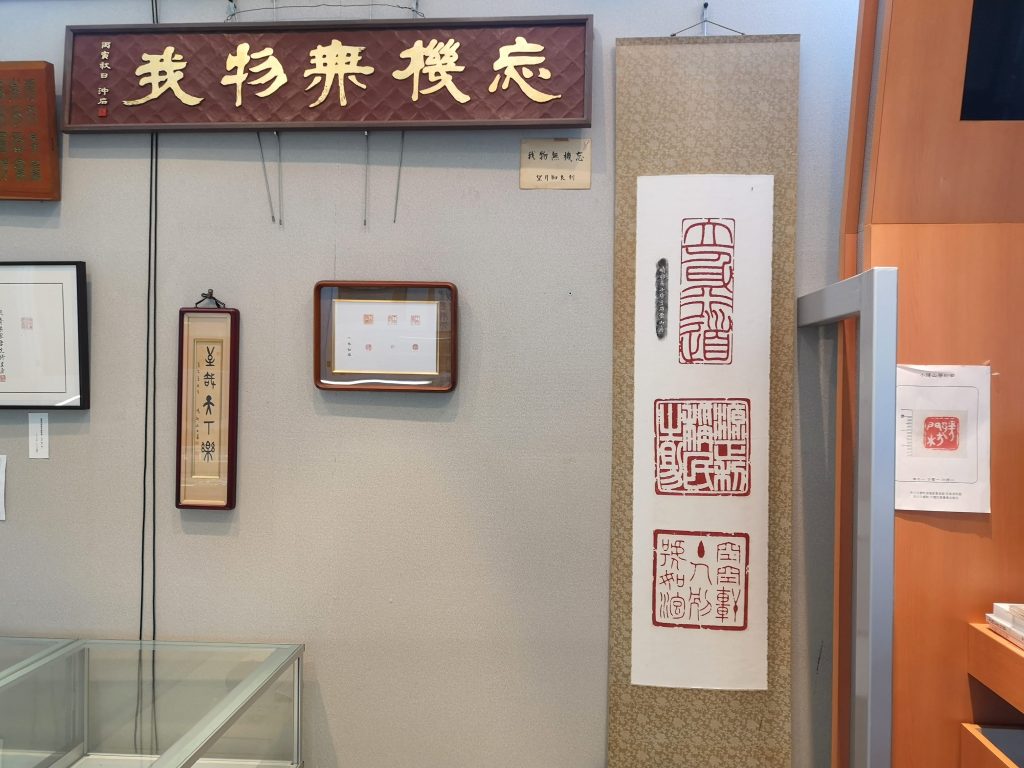
Rokugo is known for its name seals in Japan. Rokugo is a district of the town of Ichikawamisato in Yamanashi Prefecture. Its history dates back to the Edo period when high quality crystal was found in Yamanashi Prefecture and its use for name seals was established. The creativity and technique have been handed down through generations until today. Nowadays people (and the government) talk about breaking away from traditional seal usage; however, name deals will surely be around for a while at least in Japan. (https://en.wikipedia.org/wiki/Ichikawamisato) (https://www.inkanhanko.com/inkan_foreign/english/index.htm)
Welcome to Rokugo, Ichikawamisato, Yamanashi, 10/30/2021
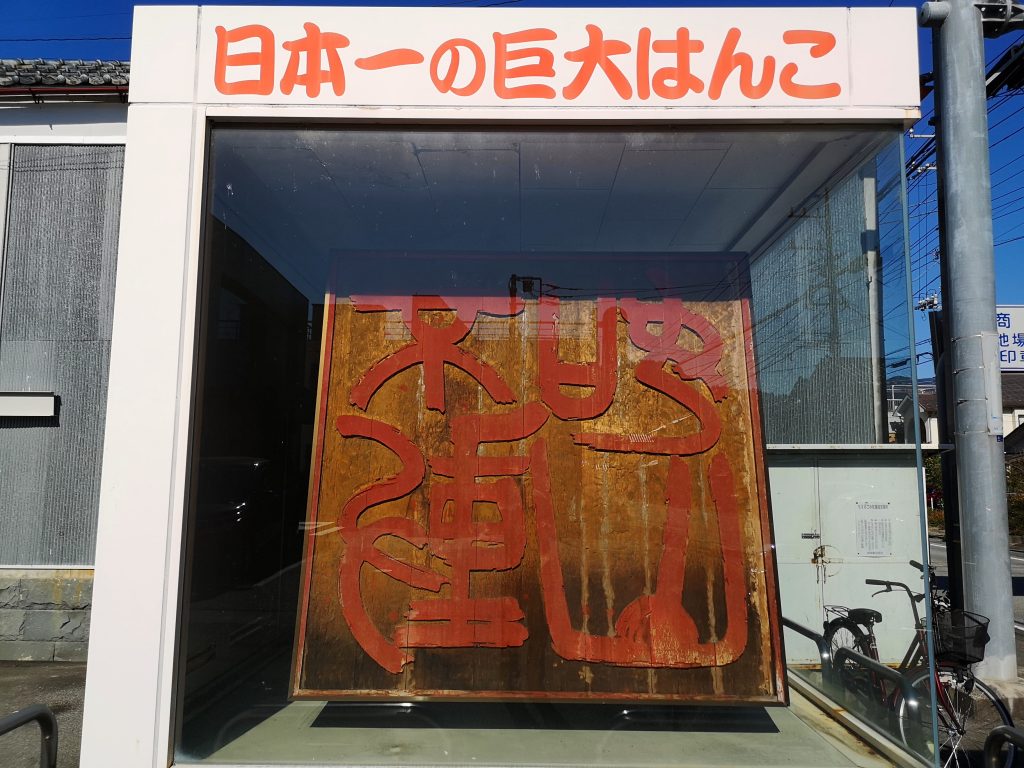
The Largest Name Seal in Japan Probably the Largest in the World, 2m x 3m weighs 6 tons; It Says Immovable Like A Mountain, Rokugo Branch, Yamanashi Chuo Bank, Ichikawamisato, Yamanashi, 10/30/2021
Office of Rokugo Name Seal Industry Federation
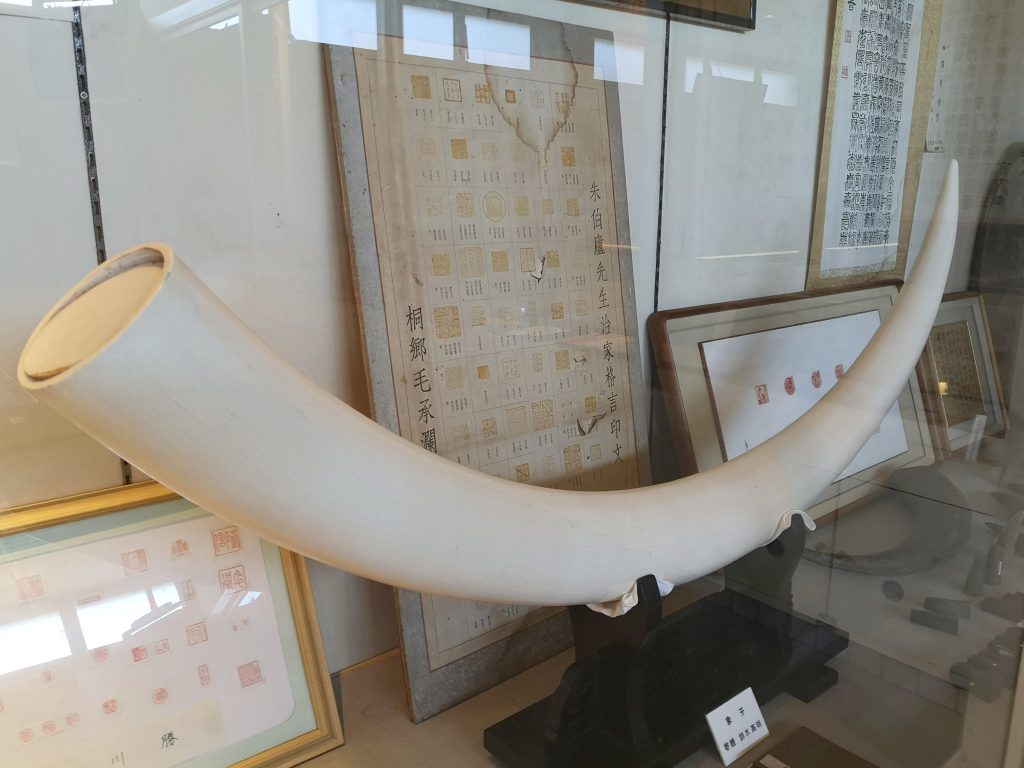
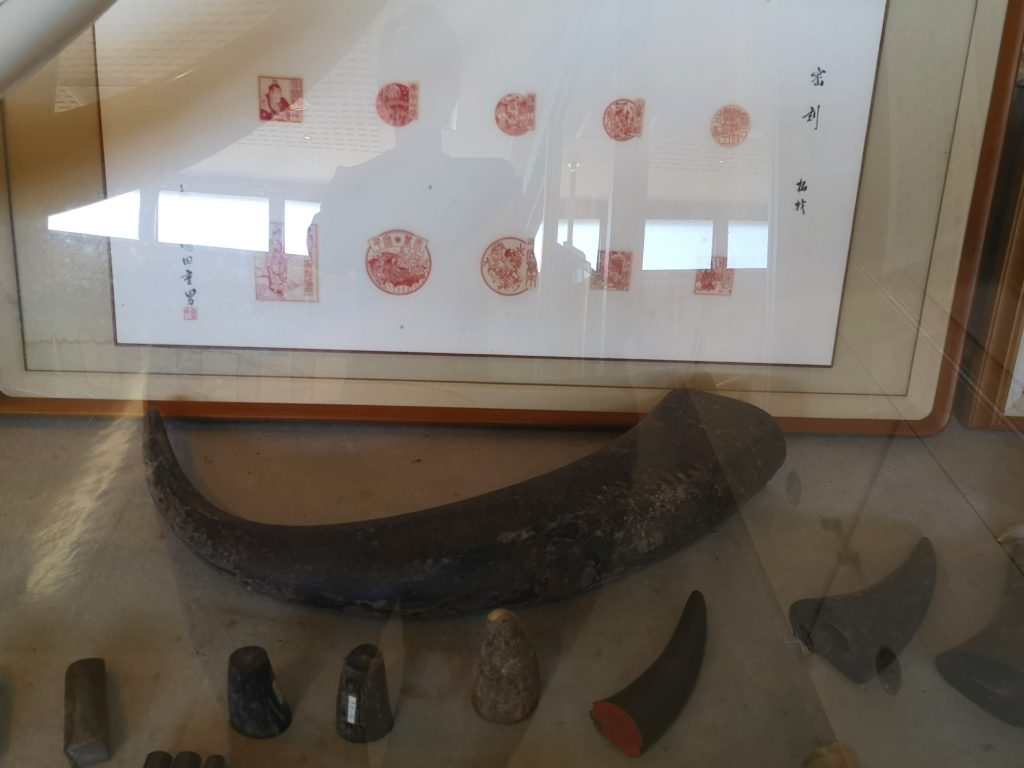
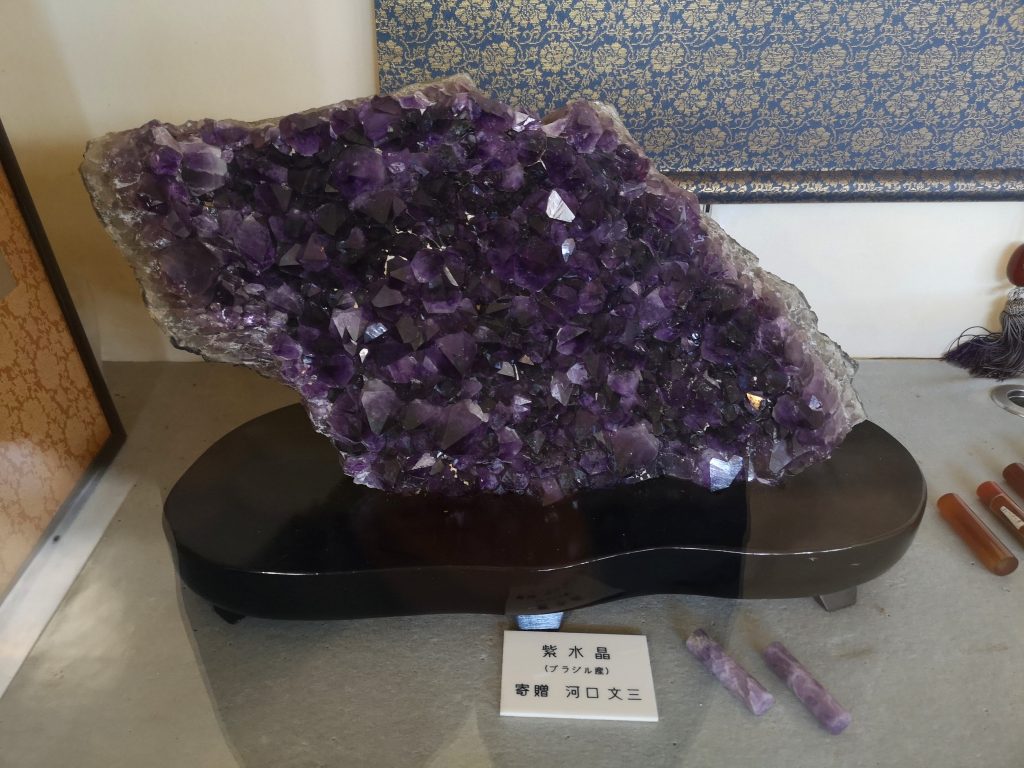
Materials for Name Seals, Tusk and Water Buffalo,Ichikawamisato, Yamanashi, 10/30/2021Materials for Name Seals, Amethyst from Brazil and Agate from South Africa,Ichikawamisato, Yamanashi, 10/30/2021Examples of Name Seals and Prints, Rokugo Name Seal Industry Federation, Ichikawamisato, Yamanshi, 10/30/2021Examples of Name Seals and Prints, Rokugo Name Seal Industry Federation,Ichikawamisato, Yamanshi, 10/30/2021